Everybody knows about the Alamo and the River Walk, but San Antonio has much more to offer beyond its two most famous tourist attractions. Even so, when you’re hosting visiting family or friends, it’s possible to draw a blank when trying to show them new sights around the city.
To give hosts a leg up, we rounded up 33 SA landmarks that will appeal to out-of-towners of all stripes, from history buffs to outdoor enthusiasts — and the kiddos too.
Historic Market Square
514 W. Commerce St., (210) 207-8600, marketsquaresa.com
The Historic Market Square dates back to the 1700s, on a plaza that was gifted to settlers by the King of Spain. The square is home to over 100 locally owned shops and an indoor mall that has been called the largest Mexican market outside of Mexico, as well as Mi Tierra restaurant and the Centro de Artes gallery. Credit: Shutterstock / Christian HinkleDenman Estate Park
7735 Mockingbird Ln., sanantonio.gov
Denman Estate Park features a traditional South Korean pavilion, styled similarly to the Gwangju Democracy Bell in South Korea. Gwangju, South Korea and San Antonio, you may be surprised to learn, are sister cities. Denman Estate Park is a beautiful place to visit, not only for the pavilion, but for the pond and garden as well. Credit: Shutterstock / TheSoronenPhotographerRiver Walk Public Art Garden
849 E. Commerce St.
This open-air art garden located on the San Antonio River Walk at the intersection where Market and Alamo Streets meet features permanent and rotating sculptures and art pieces by local and international artists. For those that need help finding the entrance, look no further than the colorful “Welcome to the River Walk Public Art Garden” sign by San Antonio artist Gary Sweeney. Credit: Courtesy Photo / City of San Antonio Department of Arts and CultureArtpace
445 N. Main Ave., (210) 212-4900, artpace.org
Founded by Linda Pace, Artpace was conceived as a “laboratory of dreams.” The nonprofit contemporary art foundation’s International Artist-in-Residence program presents a set of exhibitions created by resident artists each spring, summer and fall. Each IAIR cohort features three artists — one international, one national and one Texas-based — who create a new body of work during the residency, which is then showcased at Artpace for two months. In addition to the IAIR shows, Artpace presents exhibitions in its Hudson Showroom and Main Space throughout the year. Credit: Francisco Cortes, courtesy of ArtpaceSan Fernando Cathedral
115 Main Plaza, sfcathedral.org
The cathedral is considered the historic geographic center of San Antonio and serves as a tourist attraction, community gathering place and a symbol of the role of the Archdiocese of San Antonio. The church is one of the oldest in the country, with the cornerstone of the 15-year construction project laid in 1738. Today’s visible landmark, however, is the result of an 1868 renovation in the Gothic Revival style. If you time your visit right, you can also take in a stunning light show of images and music telling the history of the city that’s displayed four nights a week on the façade of the church. Credit: Shutterstock / Kit LeongLa Villita and the Arneson River Theatre
418 Villita St., (210) 207-8614, lavillitasanantonio.com
La Villita wasn’t always a cultural art hub. In fact, it was San Antonio’s first neighborhood. It was restored in the mid-20th century to become the cultural landmark it is today. Across the river is the Arneson River Theatre, which was built in 1939. Audiences have enjoyed concerts, folklórico performances, plays, river parades and more at this 800 seat venue over the years. Credit: Shutterstock / f11photoSan Antonio Museum of Art
200 W. Jones St., (210) 978-8100, samuseum.org
Housed in the elegantly repurposed Lone Star Brewery within easy walking distance from the Pearl, the San Antonio Museum of Art is an eclectic treasure trove of works from around the globe. In addition to the many discoveries to be made in galleries dedicated to art from Texas, Latin America, Europe, Asia, the ancient Mediterranean world and elsewhere, the museum boasts a solid contemporary art collection that includes works by notable San Antonio artists. Credit: Courtesy Photo / San Antonio Museum of ArtSan Antonio Botanical Garden
555 Funston Pl., (210) 536-1400, sabot.org
Not too far from Fort Sam Houston you’ll get to explore the natural beauty of the San Antonio Botanical Garden. The 38-acre scenic oasis is complete with trails, a pond, roses and plenty of native plants that make for a lovely photo backdrop. The garden regularly hosts events and offers gardening and cooking classes for those looking for a more hands-on experience, There’s also a glass conservatory and Jason Dady’s Jardín restaurant, an essential stop once you’re done exploring the grounds. Credit: Courtesy Photo / San Antonio Botanical GardenMcNay Art Museum
6000 N. New Braunfels Ave., (210) 824-5368, mcnayart.org
The McNay, opened in 1954 in Marion Koogler McNay’s sprawling Spanish Colonial Revival mansion, proudly presents itself as “the first museum of modern art in Texas.” Greatly expanded in 2008 with the addition of the sleek, 45,000-square-foot Jane and Arthur Stieren Center for Exhibitions, the museum complements its impressive permanent collection of Post-Impressionist paintings, medieval and Renaissance treasures, modernist outdoor sculpture, Southwestern folk art and contemporary Latino prints with both touring and homegrown exhibitions. Credit: Courtesy Photo / McNay Art MuseumThe San Antonio Missions
Multiple locations, (210) 932-1001, nps.gov/saan
Yes, the headline says not the Alamo, but San Antonio has four other historic missions that are often overshadowed by the famous downtown landmark: Mission Concepción, Mission San José, Mission San Juan Capistrano and Mission Espada. Visitors can go to one or more of the Spanish colonial missions directly, or try to see them all by hiking or biking the 8-mile Mission Reach trail. Credit: Shutterstock / Kushal BoseBrackenridge Park and the Japanese Tea Garden
3700 N. St. Mary’s St., (210) 207-7275, sanantonio.gov
San Antonians love all 343 acres of Brackenridge Park, and visit it for a variety of reasons. Inside the park is the historic Japanese Tea Garden, which was built in a former quarry and features elaborate pathways and carefully cultivated landscaping, as well as waterways filled with koi. In addition to the park’s sprawling green spaces are the adjacent San Antonio Zoo, Sunken Garden Theater and Witte Museum, plus a golf course. Credit: Shutterstock / Victoria DitkovskyCheck out the Alamo City’s free cultural attractions
San Antonio has plenty of amazing things to do that are completely free. Art lovers can visit Ruby City, Artpace and the Contemporary at Blue Star for free, and museums like SAMA and the McNay have free admission on certain days of the week, too. SA also has hidden gems like the Korean Pavilion at Denman Estate Park that are worth a visit. Credit: Dror Baldinger, courtesy of Ruby CitySan Pedro Creek Culture Park
715 Camaron St., (210) 227-1373, spcculturepark.com
Located on the western edge of downtown — adjacent to Ruby City — culture, art and nature come together as a tribute to the birthplace of San Antonio. The San Pedro Creek Culture Park features local artists’ works, created with the story of the diverse cultures drawn to the banks of San Pedro Creek for 12,000 years in mind. Murals, tiled benches, ceramic art, large-scale installations and historical texts and poetry can be seen along with the creek’s natural flora and fauna. Credit: Bridge ProjectsHays Street Bridge
803 N. Cherry St., sanantonio.gov
Originally built to allow vehicular crossing over the tracks of the Galveston, Harrisburg and San Antonio Railroad, the restored Hays Street Bridge, which now accommodates pedestrian traffic, has dual appeal. First, it’s a historically significant structure that long served as the chief connector between downtown and the city’s predominantly Black East Side. Second, the bridge offers amazing views of the city, which explains why so many runners, cyclists and lovebirds end up there. Credit: Shutterstock / JustPixsWitte Museum
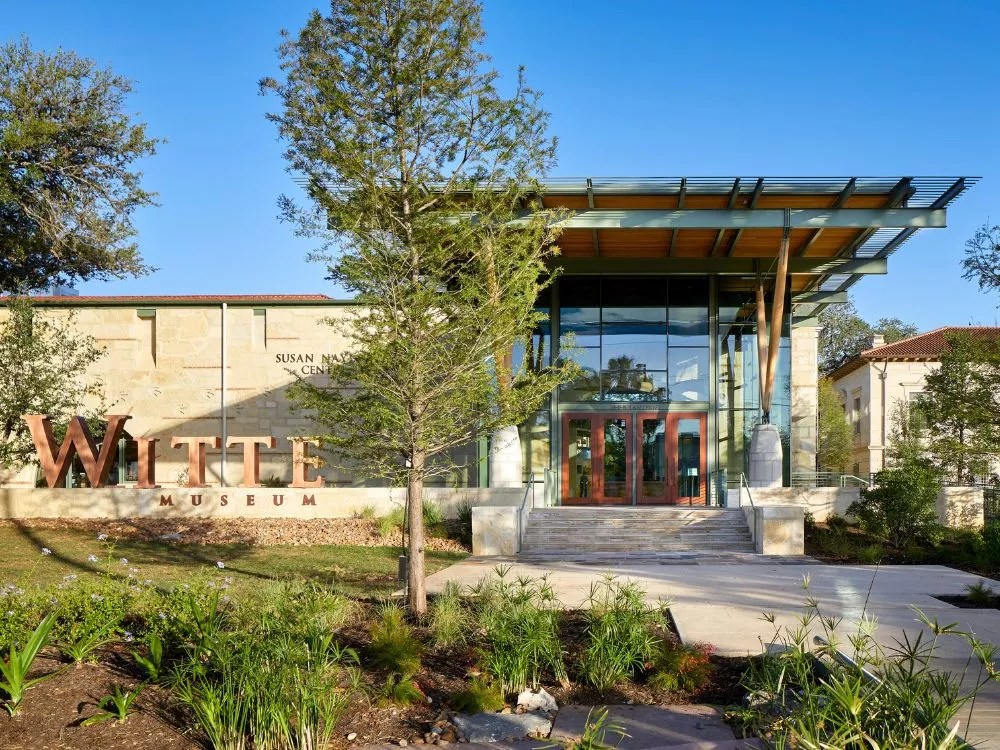
3801 Broadway, (210) 357-1900, wittemuseum.org
Founded in 1926, the Witte Museum is San Antonio’s most-visited museum. Located along the San Antonio River at Brackenridge Park, the Witte’s 10-acre campus features spacious galleries that showcase an extensive collection which includes a variety of specimens, art and artifacts ranging from dinosaur fossils to contemporary art. Credit: Courtesy Photo / Witte MuseumSan Pedro Springs Park
2200 N. Flores St., (210) 732-5992, sanantonio.gov
The blue, clear waters found in San Pedro Springs Park have been used since hunters and gatherers roamed the land nearby and drank from its springs. As the second oldest public space in America, many San Antonians’ ancestors have swam in the park’s pool. There’s no fee for locals looking to jump in this cold-refreshing water hole in the summer, and its beauty can be enjoyed year round. Credit: Brandon RodriguezPlaza Guadalupe
1327 Guadalupe St., avenida.org
This historic West Side jewel has played host to many dignitaries and visitors including Pope John Paul II in 1987, a Mexican president and several U.S. presidential aspirants, including San Antonio’s own Julián Castro. It’s also the site of a variety of arts and cultural events throughout the year. Also worth note is the nearby La Veladora of Our Lady of Guadalupe (Jesse Treviño), a mixed media mural featuring a 3D votive candle with an eternal flame facing Guadalupe Street. Credit: Courtesy Photo / City of San Antonio’s Department of Arts & CultureContemporary at Blue Star
116 Blue Star, (210) 227-6960, contemporarysa.org
Founded by a group of artists in 1986 following the success of a contemporary arts exhibition in the former Blue Star Ice and Cold Storage warehouse, the Contemporary seeks to inspire and nurture San Antonio’s community of contemporary artists. It is the first and longest-running nonprofit space for contemporary art in San Antonio, and it offers regularly rotating art exhibitions with themes that challenge and inspire. Credit: Courtesy Photo / Contemporary at Blue StarKing William Historic District
Southtown, sanantonio.gov
Southtown is known as a haven for art, flavor, culture and fun — and the entire area revolves around the heart of the King William Historic District. The Victorian-inspired neighborhood is packed with history and charm. Established in the 1800s, the district was home to German immigrants who bought land and built homes. It is named after King Wilhelm I of Prussia and is considered a Cultural Arts District today. Credit: Shutterstock / Faina GurevichBriscoe Western Art Museum
210 W. Market St., (210) 299-4499, briscoemuseum.org
Located in the heart of downtown, the Briscoe Western Art Museum showcases art and artifacts of the American West. Housed in a building that formerly served as San Antonio’s original public library in the 1930s — and the Hertzberg Circus Collection and Museum in the ‘80s — the Briscoe opened its doors in 2013. The museum grounds also include the McNutt Sculpture Garden, a public courtyard featuring an array of bronze sculptures of historic figures from the American West. Credit: Courtesy Photo / Briscoe Western Art MuseumCentral Library
600 Soledad St., (210) 207-2500, mysapl.org
The bulk of the Central Library makes it stand out, whether viewed from up close or passing by on the freeway, but it is the color (dubbed “enchilada red” by locals) that really grabs the attention. Selected in a design competition held in 1991, the building’s Mexican modernist architecture by Ricardo Legorreta includes a breathtaking multi-story atrium containing the artistic heart of the structure, a blown-glass sculpture created by renowned artist Dale Chihuly. Credit: Courtesy Photo / San Antonio Public LibrarySan Antonio Zoo
3903 N. St. Mary’s St., (210) 734-7184, sazoo.org
Located by Brackenridge Park, the San Antonio Zoo has been in operation since 1914 and is home to many species from around the planet. The zoo has many attractions including Africa Live, the Friedrich Aquarium and the Neotropica realm. The zoo also operates Kiddie Park and the San Antonio Zoo Train, making it a prime destination for kid-friendly fun. Credit: Courtesy Photo / San Antonio ZooThe DoSeum
2800 Broadway, (210) 212-4453, thedoseum.org
The DoSeum is all about hands-on fun. The museum was originally founded as the Children’s Museum of San Antonio in 1995, and opened its 68,000 square foot facility on Broadway in 2015. Dedicated to the “power of play,” the DoSeum features a variety of interactive exhibits on subjects including science, the arts and literacy. Credit: Courtesy Photo / The DoSeumBracken Cave
26101 FM 3009, batcon.org
In the summer, you can find the largest colony of bats in the world right here in San Antonio. About 20 million Mexican free-tailed bats chill at Bracken Cave from March to October, making it one of the world’s largest concentrations of mammals. So many bats are found here because the cave is a maternity site for the species, so females gather here to give birth and rear their young. Credit: Shutterstock / freelancerChrisSobalvarroMajestic Theatre
224 E. Houston St., majesticempire.com
Featuring Baroque, Mediterranean Revival and Mission Revival architecture styles, the iconic Majestic Theatre is a must-visit even if there isn’t a show going on. As the city’s oldest and largest atmospheric theater, the Majestic, which opened in 1929, has a lot of history. It was the first theater in Texas to be completely air-conditioned. Films have been screened and made their premiere here, and some scenes have even been shot within the historic building. Credit: Photo by Mike Hume, courtesy of the Majestic TheatreNatural Bridge Caverns
26495 Natural Bridge Caverns Road, (210) 651-6101, naturalbridgecaverns.com
Right in San Antonio’s backyard is the largest known commercial caverns in the state of Texas. In 1960, students from St. Mary’s University were granted permission to explore the area and were convinced that underground passages would be found underneath a 60 foot limestone slab bridge. Sure enough, one of the students felt a draft from a rubble-filled crawlway — meaning there were additional passages. Today, visitors can explore the caverns through various tours. Credit: Courtesy Photo / Natural Bridge CavernsComanche Lookout Park
15551 Nacogdoches Road, (210) 207-7275, sanantonio.gov
Though it encompasses 96 acres, Comanche Lookout Park is best known for having one of the highest elevation points in the city. In addition to beautiful views of SA, in early 2021, the park debuted new public artwork at the peak that honors the city’s indigenous heritage. Credit: Courtesy Photo / City of San Antonio Department of Arts & CultureSan Antonio River Walk Museum Reach
thesanantonioriverwalk.com
This stretch of the River Walk runs north from the more famous Downtown section up to the Pearl. The first 1.5 mile segment of the Museum Reach extension of the River Walk opened in 2009, and the final “cherry on top” Mission Reach Park Segment trail in Brackenridge Park opened in 2019. You can enjoy public artworks like Carlos Cortés’ The Grotto and Donald Lipski’s F.I.S.H, and easily access the San Antonio Museum of Art, which is located right off the river. Credit: Shutterstock / Paulettes1104Hot Wells
5503 S. Presa St., bexar.org
Back in the day, Hot Wells hot spring resort was a hotspot for some of the hippest celebs of the silent film era, including director Cecil B. DeMille and actors like Douglas Fairbanks Sr. and Sarah Bernhardt. Furthermore, the 1911 film The Immortal Alamo was partially shot across the river from the property at Star Film Ranch. The remains of the once-famous resort are now a park, where visitors can soak in the landmark’s unique history. Credit:Photo via Instagram / adm_xanderCarver Community Cultural Center
226 N. Hackberry, (210) 207-7211, thecarver.org
This East Side landmark was built as a community center in 1918 and became a segregated library for the city’s black population in the early 1930s. By the 1940s, it drew big musical acts such as Count Basie, Ella Fitzgerald, Dizzy Gillespie and Louis Armstrong. After desegregation it fell into neglect, but area residents realized its significance and formed a wall of bodies to protect it from the city wrecking ball in 1973. By 1977, under the ownership of the city, a renovated Carver reopened and has served as a go-to events facility, with a focus on African-American culture. Credit: Sarah Brooke Lyons, courtesy of Carver Community Cultural CenterMission Marquee Plaza
3100 Roosevelt Ave., (210) 207-2111, missionmarquee.com
The Mission Drive-In entertained countless numbers of car-bound moviegoers who came from all over the city from 1948 into the early 2000s. After the theater’s closure, the city purchased the site and now uses it for arts and cultural events under the supervision of the San Antonio World Heritage Office. Throughout the year, movies still flicker across the original big screen, only viewers now sprawl on blankets or in lawn chairs across a lawn facing the screen. Credit: Courtesy Photo / Slab CinemaThe Guenther House
205 E. Guenther St., (210) 227-1061, guentherhouse.com
Giving a glimpse into the lifestyle of San Antonio’s affluent residents of the 1800s, the impeccably upkept Guenther House truly takes visitors back in time. The home, which has served as a restaurant and museum, belonged to Pioneer Mills founder Carl Hilmar Guenther. Located on the river and hidden away from the surrounding Southtown, the Guenther House is a must-visit for foodies and history buffs alike. Credit:Photo via Instagram / morningsuninmylifeThe Medicine Wall
3104 N. Loop 1604 W., texasclimberscoalition.org
This may be a bit much for the average tourist, but it’s a must-visit for outdoors enthusiasts. After 20 years without legal access, rock climbers were officially given the go ahead to ascend the popular sport climbing crag known as Medicine Wall in 2020. Accessed through the Salado Creek Greenway trail system, the outdoor climbing area offers nearly 50 bolted routes on an 80-foot limestone bluff. The City’s first officially sanctioned outdoor climbing wall is reached through the greenway’s parking lot off Loop 1604. Credit:Photo via Instagram / mattrelliott