


Castro, a San Antonio Democrat, made the statement in an Instagram video shot on the steps of the U.S. Capitol building ahead of the vote. He said he would vote against the resolution.
Castro was joined by every other Democrat in the House and one Republican — U.S. Rep. Thomas Massey of Kentucky — in opposing the resolution. The measure passed on a narrow 217-215 margin after an arduous whip effort on the right, according to multiple media reports.
“I’m voting NO on the Republican plan to cut hundreds of billions of dollars from Medicaid and nutrition assistance to fund tax cuts for billionaires,” Castro said in the caption of his Instagram clip. “More than 4 million Medicaid recipients in Texas — mostly children and seniors — could lose their health care under this plan.”
In the video, Castro added that Texas is already the least insured state in the country.
A more reserved version of the budget already passed the Senate, where it will return to committee. In other words, President Trump’s “big beautiful bill” still has a way to go to become law.
The Supplemental Nutrition Assistance Program (SNAP), the nation’s food-stamp program, also is potentially on the chopping block. The resolution directs the House Agriculture Committee to cut $234 billion through 2034 from programs under its purview, with most or all of the funds expected to come from SNAP, according to a Center on Budget and Policy Priorities report.
The rate of reliance on SNAP assistance in San Antonio is higher than the state average, according to University Health. At least one in four households on San Antonio’s South Side rely on SNAP, for example.
The version of the budget that passed the House drastically expands the scope of the cuts in the narrower resolution adopted by the Senate. That proposal called for $1 billion in SNAP cuts as opposed to the House’s figure of $234 billion over the same period.
The proposed whittling away of entitlement programs will help pay for some of the $4.5 trillion in tax cuts for the ultra-wealthy laid out in the House measure. Bernie Sanders calls this a “reverse Robin Hood” — taking from programs for the poor to give cuts to the wealthy.
Despite attempting to partially pay for the tax cuts by slashing programs for the poor, the cuts could increase the deficit by $2.8 trillion, according to the Committee for a Responsible Budget, a nonprofit advocating for federal fiscal discipline.
Initially, the vote faced an uphill battle in the House. Several Republicans — including not just Kentucky’s Massey but also U.S. Reps. Tim Burchett, Warren Davidson and Victoria Spartz — came out against the resolution.
The AP reports Trump called the handful of skeptical Republicans and invited them to the White House. In the end, Massey was the party’s sole holdout.
“If the Republican plan passes, under the rosiest assumptions, which aren’t even true, we’re going to add $328 billion to the deficit this year,” Massey told CSPAN from the Capitol. “We’re going to add $295 billion to the deficit the year after that, and $242 billion to the deficit after that — under the rosiest assumptions. Why would I vote for that?”
Subscribe to SA Current newsletters.
Follow us: Apple News | Google News | NewsBreak | Reddit | Instagram | Facebook | Twitter| Or sign up for our RSS Feed
Related Stories
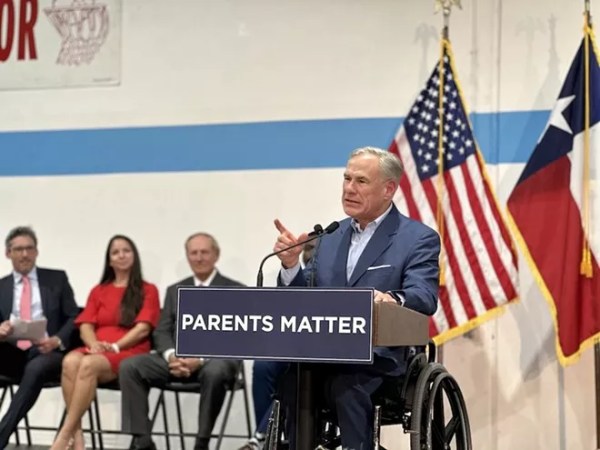
Texas Gov. Greg Abbott says vouchers won’t defund Texas high school football programs

Texas House establishes own DOGE to ‘reduce the size and scope of government’

San Antonio State Sen. Roland Gutierrez tells Musk and friends to shove Nazi salute ‘up your ass’

Texas ranks 46th in nation for women’s health, according to new report

San Antonio’s top health research centers poised to lose $50 million in Trump NIH cuts

Rep. Al Green disrupts Trump speech and is escorted out

San Antonio U.S. Rep. Joaquin Castro accuses Trump officials of ‘lying to nation’ about group chat debacle

GOP’s ‘big, beautiful bill’ will devastate San Antonio families, rural Texans, Rep. Joaquin Castro warns

The tax increase tucked into Trump’s ‘big beautiful bill’

Joaquin Castro says he was on alleged Minnesota assassin’s hit list
San Antonio Rep. Joaquin Castro says GOP lawmakers’ support of Big, Beautiful Bill will cost lives
This article appears in Feb 19-25, 2025.