Join 30,000 locals who stay current on San Antonio news, culture, and events. Get our free newsletters in your inbox three times a week.
Don’t Miss a Moment.
Join 30,000 locals who stay current on San Antonio news, culture, and events. Get our free newsletters in your inbox three times a week.
For many years, San Antonio seemed to change at a slower pace than other big Texas cities. That’s no longer the case.
Many prominent Alamo City landmarks have disappeared before our eyes, whether they be public spaces, favorite dining spots, beloved retail locations or popular amusements. But before we assume all those changes have been recent, we also lost plenty in the preceding decades.
Here’s a roundup of 20 San Antonio landmarks — some beloved, others noteworthy for their audacity or oddness — that have either closed down, turned into something else or been completely razed as time moved on. While many of these may spark feelings of nostalgia, there may be a few you never knew existed.
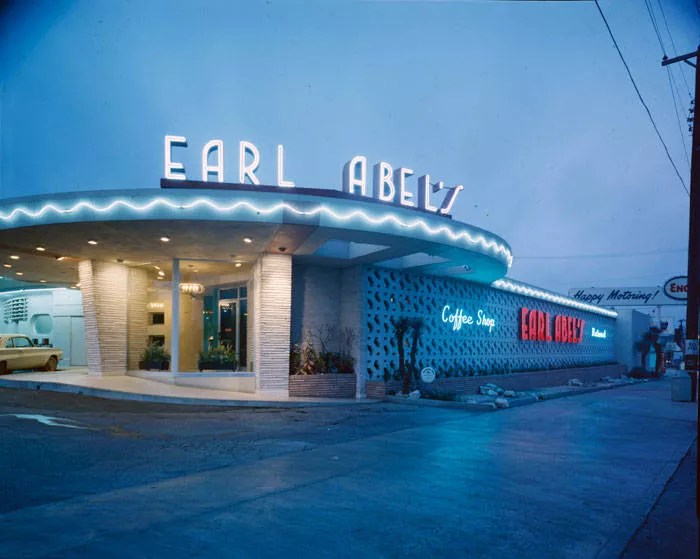
Earl Abel’s
Located at Broadway and Hildebrand, this iconic San Antonio restaurant was enjoyed by generations for its fried chicken, pies, breakfasts and other comfort food. It opened in 1933 but was displaced in 2006 by the construction of a luxury condo tower. New owners kept the SA favorite going in two new locations but finally threw in the towel last year due to post-pandemic pressures.
Photo via UTSA Libraries Digital CollectionsThe Sky Ride at Brackenridge Park
The towering Sky Ride at Brackenridge Park opened on November 14, 1964, offering gondolas with amazing views of the park below. The ride closed in 1999 due to maintenance costs.
Photo via UTSA Libraries Digital CollectionsThe Fredericksburg Road Drive-In Theatre
The Fredericksburg Road Drive-In, which opened in 1940, was the city’s first drive-in cinema, according to historical site Cinema Treasures. The rear of the movie screen faced the road, and at various times the structure displayed murals of an actress, then a clown and finally a midcentury-style geometrical pattern, according to Cinema Treasures. The landmark finally went the way of other drive-ins around 1982.
Photo via John Margolies Roadside America Photograph ArchiveHemisFair Arena
HemisFair Arena made its debut in 1968 with a game between the Harlem Globetrotters and Washington Generals. Over the years, it hosted the San Antonio Spurs along with musical acts including Elvis, Selena, the Jackson 5, Rush and Janis Joplin. The aging arena was torn down in 1995.
Photo via Instagram / panamaniac_xEl Mirador
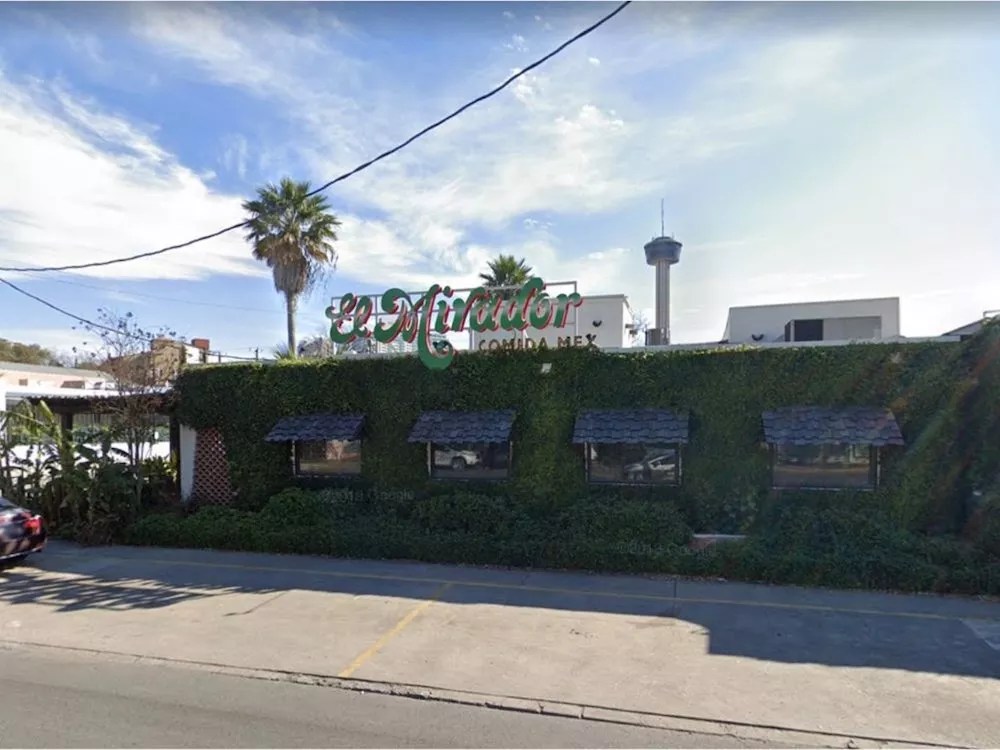
Opened shortly before HemisFair ’68, the Treviño family’s El Mirador evolved from a modest Mexican eatery into a King William landmark and gathering place for some of the city’s highest-power politicos. The family left the restaurant business in 2014, and new ownership kept the enterprise afloat until it sold in 2018 to restaurateur Lisa Wong who knocked most of it down to make way for Rosario’s ComidaMex & Bar. Credit: Google MapsWindsor Park Mall
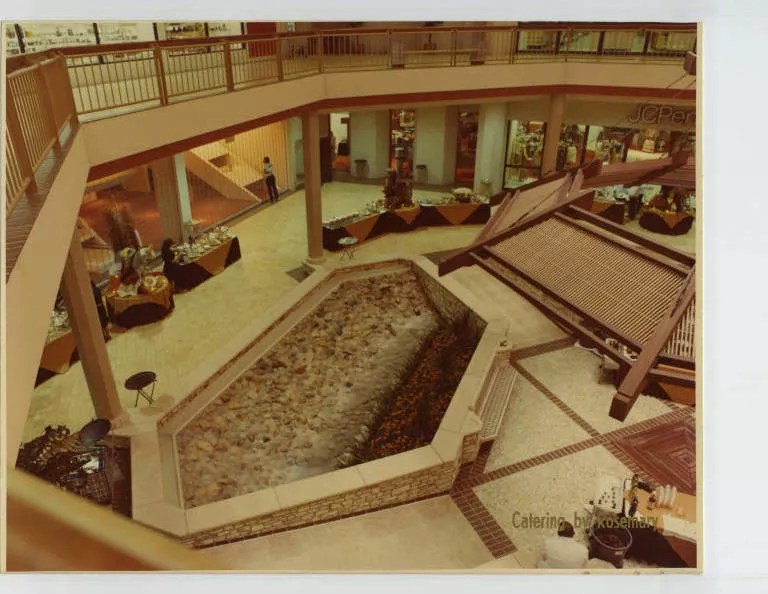
Northeast San Antonio’s Windsor Park Mall made its debut in 1976 with anchor tenants including Montgomery Ward, JCPenney, Joske’s and Dillard’s. After Ward’s closed in the early 2000s, the mall went into decline and ultimately shut its doors. The structure has since been redeveloped into tech firm Rackspace’s corporate headquarters.
Photo via UTSA Libraries Digital CollectionsThe Joy Theatre
The Joy Theatre opened in 1940 just about a block north of City Hall. Designed by architect J.M. Marriott, the movie house played first-run films but eventually shut down in the late 1950s. It later reopened to present Spanish-language vaudeville shows, then served as an adult theater for the last part of its run. It’s since been demolished.
Photo via John Margolies Roadside America Photograph ArchiveThe Spanish Galleon
The Spanish Galleon Restaurant, part of a Texas-based chain, opened in 1976 on San Pedro Avenue, bringing an extensive seafood menu and an eye-catching gimmick to the city. Dallas architects Brooks and Orendain designed the eatery’s elaborate exterior, while PMB Construction of Forth Worth designed the interior, the Express-News reports. In 1983, the Spanish Galleon sailed into the sunset when it was taken over and transformed into a Pancho’s Mexican Buffet location, according to the daily. John Margolies Roadside America Photograph ArchiveFrost Bros.
For decades, San Antonio fashion mavens flocked to Frost Bros., a high-end retailer than opened downtown in 1917. The homegrown business was a shopping institution for local families and visitors, and it eventually opened in North Star Mall. However, Frost Bros. was forced to close up shop and liquidate during the turbulent retail environment of the late 1980s.
Photo via UTSA Libraries Digital CollectionsThe Monterey
Southtown restaurant The Monterey opened around 2010 and closed five short years later, but it left a major mark on the city’s culinary scene. Operated by Chad Carey, who now owns Barbaro and Hot Joy, the restaurant specialized in modern American cuisine made with locally sourced ingredients. It’s often credited with raising the profile of fortified wines among SA diners. Credit: Bryan RindfussThe mini-monorail at Hemisfair
This futuristic form of transportation was developed in 1968 at the Hemisfair complex as part of San Antonio’s World’s Fair. Passengers could board and be carried along to the event’s various pavilions. A collision that same year by two of the trains killed one visitor and injured 40. Following the fair, the monorail went into disuse, and it was scrapped in the 1970s.
Photo via UTSA Libraries Digital CollectionsPlayland Park
Playland Park opened in 1943 at the intersection of Alamo and Broadway. The ever-expanding attraction became the destination for countless kids’ birthday parties. In addition to bumper cars and a Ferris wheel, the park featured a wooden roller coaster known as The Rocket. The park shut down in 1980.
Photo via UTSA Libraries Digital CollectionsButter Krust’s moving billboard
The “Falling Slices” billboard on San Pedro Avenue just north of Hildebrand featured a rotating wheel that made it appear slices were tumbling from a loaf of Butter Krust bread. The Butter Krust ad came down in 1998, and the mechanical portion of the sign was removed roughly 10 years later.
Photo via Instagram / barbacoapparel Credit:Instagram / barbacoapparelSan Antonio Children’s Museum
Before evolving into The DoSeum, the Broadway destination that offers hands-on-learning experiences for youngsters, the San Antonio Children’s Museum on Houston Street housed two stories of interactive games and attractions. The museum opened in 1995 and closed 20 years later.
Photo via Instagram / sachildrensmuseumFiesta Plaza Mall
During the ’80s, then-Mayor Henry Cisneros wanted downtown’s Fiesta Plaza Mall to promote economic growth on the West Side. He also envisioned it as an attraction that would open tourists’ wallets and prolong their stays. An on-site tech incubator even promised to drag San Antonio into a new era. In reality, the development was a quick failure, and detractors dubbed it the “Pink Elephant” based on its ugly-ass paint job. The mall was razed and the land eventually became UTSA’s downtown campus.
Photo via city-data.comKeyhole Club
Owned by Louisiana native and jazz trumpeter Don Albert, the East Side’s Keyhole Club opened in 1944 as one of the city’s first integrated nightclubs. Traveling musicians including Dizzy Gillespie and Louis Armstrong were among the performers who took its stage. The original Keyhole Club closed in 1948, and a relocated version followed, but it’s also long gone.
Photo via UTSA Libraries Digital CollectionsBrackenridge Park Reptile Garden and Alligator Farm
Completed in 1937, this attraction on the edge of the Witte Museum’s property charged a dime for spectators to walk through and view alligators, snakes, turtles and other wildlife, according to city archives. Although its popularity is credited with helping keep the Witte open through the Great Depression, it was shuttered in 1975.
Photo via UTSA Libraries Digital CollectionsTeen Canteen
Sam Kinsey opened the first Teen Canteen in 1960 to give San Antonio youngsters a place to enjoy the rock ‘n’ roll craze. The nightspot became a key venue for the city’s burgeoning garage rock scene then for the psychedelic music that flowered later in the decade. It was a regular stop for legendary Texas groups including Bubble Puppy, Shiva’s Headband and the Moving Sidewalks. ZZ Top reportedly played its first show there. The Teen Canteen moved several times, ending up at Wonderland Mall in 1963, then a spot on Bitters Road in the late 1960s. The club closed in 1977. Credit: Courtesy Photo / Sam Kinsey Teen Canteen CollectionThe Pig Stand
In operation for 101 years, the Pig Stand was one of the nation’s iconic diners, and many commuters passed it daily on Broadway as they traveled to work downtown. The restaurant closed in 2023 after a development company bought it to make way for more projects along the gentrifying corridor. Credit: Sanford NowlinTaco Land When it comes to underground rock clubs, they didn’t come more underground than Taco Land. The rough-edged neighborhood bar and its profane proprietor Ram Ayala had a way of scaring off squares. All the while, it played host to a litany of amazing touring and local acts, some of whom were so impressed they even commemorated the place in song. The slaying of Ayala and doorman Doug “Gypsy Doug” Morgan during a 2005 robbery permanently closed the spot, although the Velvet Taco restaurant now on the site includes tributes to both men and the one-of-a-kind venue that once stood there. Courtesy Photo / Erik Sanden Credit: Erik Sanden