For many San Antonians, Mayor Ron Nirenberg was a calming force during the uncertainty of the pandemic. To be sure, some political observers argue his performance during the global health crisis may go down as his political peak.
The mayor appeared nightly on TV with County Judge Nelson Wolff, speaking openly and transparently about hospitalizations and deaths. In measured tones, the pair urged residents to mask up and get vaccinated, offering a sharp contrast to the rancor and contradictory messaging coming from the first Trump White House.
It was a career-making moment for the former District 8 councilman — a stoic, wonkish leader who spent much of his first mayoral term fending off accusations that he was too eager to go it alone and didn’t work to build consensus on the dais.
Hurt by low turnout among his base, Nirenberg only earned a second term after a punishing runoff against populist candidate Greg Brockhouse. However, bolstered by his steady showing during COVID, Nirenberg racked up easy victories to secure his third and fourth trips to the mayor’s office.
“I think we all knew — including a lot of naysayers — that [Nirenberg] couldn’t really be challenged after how he handled things during the pandemic,” said District 6 Councilwoman and current mayoral candidate Melissa Cabello Havrda. “He was a great leader in a crisis.”
With the mayor term-limited and a May 3 election set to decide who will succeed him, many look back on his legacy as generally favorable. Even so, some political observers question whether he was ever able to rise to the same level of leadership he displayed during the pandemic.
Indeed, both critics and allies agree Nirenberg’s legacy feels unfinished — or at least undecided.
“He’s been a relatively successful mayor, overall, but I think there are pressing issues like affordable housing where a whole lot more needed to be done,” University of Texas at San Antonio political scientist Jon Taylor said. “He had great intentions, but there wasn’t always follow-through with the reforms this city needs, especially on the scale they require.”
When he ran for office, Nirenberg trumpeted a desire for more transparency in government and better equity in the distribution of city services. He also pushed for better jobs, more affordable housing and long-term transportation solutions.
Unlike some prior mayors, he also didn’t flinch from acknowledging the Alamo City’s problem with generational poverty — or that the system that created it was no accident. Further, he avoided scandal and did an admirable job publicly upholding San Antonio as a compassionate city.
Still, the verdict is out on Nirenberg’s key policy wins, many argue.
First, there’s the San Antonio Ready to Work job-training program, which has struggled to meet its ambitious goals of placing 80% of participants in jobs paying at least $15 an hour within six months of wrapping up training.
Then there’s the $150 million affordable-housing bond voters passed in 2022. Although it seemed like a major investment at the time, there’s a building consensus the bond money simply isn’t enough to fix the problem.
Critics also argue Nirenberg’s fourth-term push for the secrecy-shrouded Project Marvel — a pricy and sweeping plan to build a “sports district” downtown — represents a betrayal of his call for more city transparency. And with a cost likely to run in the billions, it’s also questionable whether voters will even support the proposal.
What’s more, naysayers argue, the mayor’s willingness to let downtown’s low-price Soap Factory apartments be razed to make way for a new minor-league baseball stadium shows a shaky commitment to affordable housing.

For some observers, those contradictory stances highlight Nirenberg’s attempt to appeal to progressive voters while staying cozy with San Antonio’s business leaders and the entrenched bureaucracy of city government.
“I remember when we were discussing whether to support [Nirenberg] in 2017, one of our members said, ‘He’ll do more for the business community than he’ll ever do for us,’” said Michelle Tremillo, executive director of the grassroots Texas Organizing Project. “I’d say that sentiment has held true. We’ll never be his first priority.”
To understand that, let’s look back at the 2017 election that put Nirenberg in the mayor’s office. His win came as a result of disheartened liberals and moderates looking for a candidate who could be a local antidote to the recently elected Trump. Others sought an alternative to increasingly conservative-leaning incumbent Mayor Ivy Taylor.
Although San Antonio elections are nonpartisan, many interpreted Nirenberg’s focus on equity and his success as a councilman in protecting the Bracken Bat Cave from development as signs of his progressive bona fides.
The luster dimmed during his first term as Nirenberg offered only tepid support for an ordinance that would guarantee paid sick leave for workers. He also frequently filled city panels with a familiar slate of business leaders rather than fresh faces likely to shake things up, critics charge.
Two years later, the result was a languid turnout from his progressive base and a runoff with Brockhouse some political observers said never should have happened.
Ahead of the 2019 runoff, Nirenberg met with representatives of nearly 30 progressive groups in hope of rallying enough support to beat back the challenge, according to people familiar with the meeting. The mayor pledged to offer a full endorsement of paid sick leave, and made good on his promise.
However, that marked the end of his earnest outreach to progressive organizations, said Graciela Sanchez, director of the Esperanza Peace and Justice Center.
“Once he got reelected, he just kind of disappeared,” Sanchez said. “We weren’t surprised, just disappointed. … I can’t hate him for it. It just showed he’s not any different from the elected leaders who came before him.”
While some progressives feel let down by Nirenberg’s record, LGBTQIA+ community organizer Julian Tovar said the mayor was at least consistent in his support of San Antonio’s queer community.
“He’s been an ally for a while, and it certainly wasn’t to score political points,” Tovar said. “From my perspective, he was always acting to ensure that a portion of the community felt protected.”
During his first term on council, Nirenberg voted for the adoption of San Antonio’s non-discrimination ordinance, which offered protections for LGBTQIA+ people. Last year, he led council to codify the city’s LGBTQ+ Advisory Board so the community would continue to have a seat at the decision-making table after his departure.
Nirenberg’s defenders also argue his late start on key initiatives such as Ready to Work and the housing bond was a result of the pandemic. The COVID crisis hit especially hard in San Antonio, where striking photos of massive food drives showed the vulnerability of the city’s working class.
Backers also point to other wins along the way, such as the ironing out of longstanding feuds with San Antonio’s powerful police and fire unions, the expansion of the city’s meager airport facilities and the growth of its sustainability programs.
Even so, political experts said it may take a few more years to gain a full understanding of what Nirenberg accomplished, much of that depending on how well the city continues to iron out the kinks in Ready to Work.
“The idea of Ready to Work and the need for it were merited,” said long-time political consultant Laura Barberena, who’s working for District 8 Councilman and mayoral candidate Manny Pelaez in the current election. “The execution has continued to have issues, and pivoting to address those issues was necessary to make the program a future success.”

Despite the unfinished business, St. Mary’s University political scientist Arturo Vega said he sees Nirenberg’s tenure as an overall success. Even though the mayor didn’t shake the foundations of City Hall, he balanced commitments to backers with varied interests. As a result, he edged the city forward — just not at the pace some hoped.
“Mayors aren’t superheroes. They have to build a working coalition if they want to get anything done,” Vega said. “His approach was always fairly pragmatic.”
Still, those who hoped Nirenberg would come down more decisively on the side of the poor, the marginalized and the environment maintain the legacy is one of let-down. After all, Nirenberg’s much-vaunted Climate Action and Adaptation Plan only passed City Council after the rollback of many of its emission-cutting goals.
“I think he’ll leave us as a nice guy, a guy with a nice smile, but not someone who was courageous enough to do the right things for the working people of San Antonio,” Esperanza’s Sanchez added.
UTSA’s Taylor said Nirenberg could have aimed higher when it came to San Antonio’s most-pressing issues, namely generational poverty, affordable housing and worsening traffic. Still, the political reality is he might have been a shorter-tenured mayor had he mounted too much of a challenge to the status quo.
“For lack of a better term, you could say Nirenberg took an incremental approach,” Taylor said. “But the thing about incrementalism is that while you may move things forward a bit, it really doesn’t get noticed.”
Subscribe to SA Current newsletters.
Follow us: Apple News | Google News | NewsBreak | Reddit | Instagram | Facebook | Twitter | Or sign up for our RSS Feed
Related Stories

Voter fatigue, Fiesta likely to lead to low voter turnout in San Antonio mayoral election

Bexar Democrats target San Antonio mayoral candidate Rolando Pablos over ties to Greg Abbott

Trump’s temporarily delayed trade wars endanger San Antonio’s working class, lawmakers say
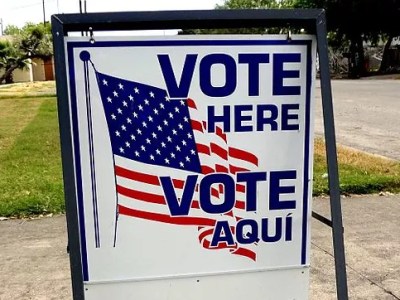
Just 5.8% of registered voters turned out for early polling in San Antonio’s mayoral election

Four San Antonio mayoral candidates accuse others of taking ‘dark money’

San Antonio Mayor Ron Nirenberg will teach at Trinity U. after term ends

The biggest winners and losers of San Antonio’s weekend election

Expert says Gina Ortiz Jones’s election-night media snub is ‘odd’ but unlikely to sway voters

Circumstances could help Rolando Pablos become San Antonio’s first Republican mayor in 30 years

Pablos zeroes in on local issues while Jones rebukes Trump, Abbott in San Antonio mayoral debate

San Antonio City Council to vote Thursday on using state’s share of visitor tax for Spurs arena

Former San Antonio Mayor Ron Nirenberg looking into run for governor’s office, sources say
This article appears in Apr 30 – May 13, 2025.