

He sure was. I even thought of giving speeches on “Johnny Cash’s luck.” There are so many instances… Can you think of a specific one?
Well, when he happened to unknowingly be driving around Sun Studios at such an important time in music’s history…
Oh, yes… Well, the first lucky incident is just him going to Memphis. He goes to Memphis because he wants to get a job there. But the truth is that, for a young, unschooled Johnny Cash, there isn’t a better place he could’ve picked than Memphis. Sam Phillips is just starting Sun Records, and the first day [Cash] arrives back from Germany Elvis cut his first record there. Johnny Cash loved that record. He saw Elvis appear at a drugstore opening singing the song, and he asked him, “How do I get a job at Sun Records?” And he called Sun Records and they kept putting him off day after day after day. After work he would go home and drive by Sun Records not knowing it was there, until the day he finally went to see Sam Phillips and [Phillips] said, “OK, sing some stuff, maybe we can make some music together.” Had he moved to a different place, he would’ve probably not made it because [Cash and the Tennessee Two] weren’t that great, not at all like other stars of the time. And the other important thing is that, by recording with Sun Records, he always had a rock ’n’ roll audience interested in him. Had he gone to Nashville and made those same records he would have never made it. He’d be considered a country star like Marty Robbins or somebody like that. By going to Sun he was always part of that Elvis Presley/Jerry Lee Lewis world. So when he goes back to Folsom Prison in 1968 Rolling Stone is all excited, because here’s a rock and roller doing that kind of stuff. If Marty Robins had done the same thing, [RS] would not have cared.
OK, so that was the first stroke of luck, and the last one was meeting Rick Rubin.
That sure was. But the biggest one of all, probably, is when he’s in Germany and in his first week he sees a movie called Inside the Walls of Folsom Prison. Had he gone to Germany a week later, he would have never heard of Folsom Prison and wouldn’t have written the song. But even then, he gives up on writing the song, and one day he’s walking down the barracks and a guy was listening to a song he had bought on a whim the night before, “Crescent City Blues.” Cash hears that, goes over to the guy and says, “Could you play that again?” And he pretty much copied, or stole, or however you want to put it, but so much of “Folsom Prison Blues” is from “Crescent City Blues.”

So if that guy hadn’t bought that record, [Cash] would not have heard that song. But by 1993 he had been dropped by Columbia Records, he was doing terrible in Mercury Records, he had no more faith that people even cared about him, he thought his career was over and his legacy forgotten, and this rock ’n’ roll/rap producer walks into a show at the Rhythm Café in Santa Ana… He had been playing arenas in his life and now he’s playing these little cafes. June Carter said, “This is ridiculous, John. You can’t work with this guy, a rock/rap producer.” But [Cash] had no alternative. When I talked to Rick that is the thing that struck him the most about Cash’s reaction—the fact that Cash was curious. “Why would anybody be interested in me? My career is over with.” So Rick’s biggest challenge was rebuilding Cash’s confidence in himself. And that’s a really inspiring story, to see how these two guys became so close and how Rick struggled, and struggled, and struggled to get Cash to believe in himself again. And once John started to believe in himself, he was able to do some of the best work of his life, at the age of 65.
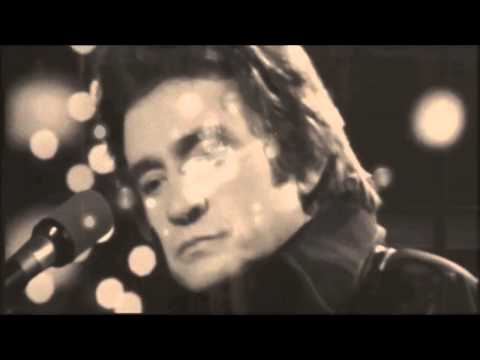
Recently, some young local bands here did a Johnny Cash tribute…
Really? Where was that?
Here in SA!
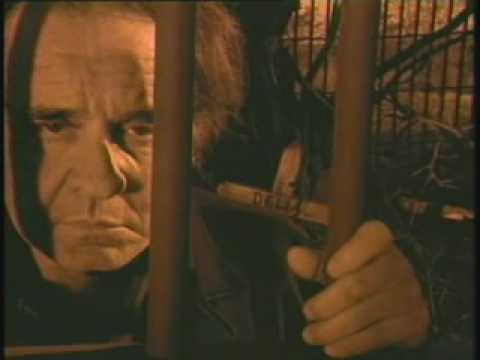
That’s great! I think Rick Rubin brought him into a new generation of people. If it hadn’t been for the Rick Rubin years, he would not have had the same stature and the impact on people as he has today. The old people are gone and their influence has gone away, but it is the young people that got turned on by the Rick Rubin era that are still here. He appealed to so many different people. Rockers and punksters, and the reggae crowd are attracted to him because there was an essential truth in what he was saying. People believed Johnny Cash. He was very good at empathizing with people, especially with the underdogs, because he was an underdog himself. He had been in trouble with the law, so he could relate to people in prison whenever he sang in prison. He knew how to design shows in order to communicate directly to his audience, either in prison or at the White House. June didn’t want him to release the “Hurt” video. “John, your fans are going to think you’re destitute,” and all that, but he thought it was a piece of art. He was so brave to put that out.

Reading the book, it’s obvious that you really loved and admire Cash, but, as usual in your work, you had no problem being critical of him, and it is clear that Cash did make some awful albums…
Oh yes, he had bad albums. After the superstardom of the ’70s, the prison album and the TV show, he’s got a son now, he wants to enjoy that part of his life that was a blur in the ’60s. He was on drugs and felt guilt every day of his life about leaving his daughters. If you look at the picture in the cover of the book, those sad eyes… He always seemed to have those sad eyes. The sadness over leaving his family and his brother dying… There was a lot of sadness in his life. So in the ’70s he wants to devote his life to his family, invites the girls to come back to Nashville to be with him, he has a son, meets Billy Graham, goes out with him in crusades… In the ’60s music was his only comfort, he devoted night and day in writing better songs and recording concept albums. By the ’70s he had started to relax, paying attention to all the things he neglected in the ’60s, but he now started neglecting his music. And slowly the albums kept getting weaker and weaker. By the time he realizes this and tries to correct it, country music had left Cash behind. You get all these Kenny Rogers, and country radio won’t play Cash anymore. So he goes down and down and down. Once in a while he’d come up with a good album, but his confidence was gone and Columbia drops him. So the period from ’75 to ’90 or even 1993 was a very uneven period for Johnny Cash. When he wanted to think of the music again, it was too late. There were good tracks here and there, but for the most part those albums were poor. But another very important thing happened just a month before he met Rick Rubin. U2 invited him to the studio to sing the lead in “The Wanderer.” Written by Bono, it’s a gospel song. Cash was very intimidated because he had no confidence and here was the world’s biggest group asking him to sing with them. And he did it and got all this acclaim, and the album was a big hit, and Rolling Stone gave it a good review. That really helped him get his spirits up a little bit before Rick Rubin came in.

This article appears in Oct 23-29, 2013.