


Pastry chefs deserve the admiration of food lovers — even those who claim not to have a sweet tooth.
First, these culinary professionals have dedicated themselves to mastering meticulous techniques on a quest for precision and perfection. While savory cooking allows for some degree of improvisation and last-minute tweaking, baking is far more dictated by the laws of science. A slip of the hand when measuring any one ingredient can destroy a potential masterpiece before it even hits the oven.
Second, these culinary innovators transform simple ingredients into visually stunning and mouthwatering creations even though they seldom receive the same level of fanfare lavished on their counterparts on the savory side. You may know the name of the executive chef at your favorite dining spot, but do you know who’s handling the bread and desserts?
Sadly, in recent years, many restaurants have outsourced the pasty side of the house to cut costs and consolidate staff. The results can be painful. Few things give a dining experience a more auspicious start than fresh, still-warm bread being delivered to the table. Or bring it to a more satisfying conclusion than indulging in an innovative and decadent house-made dessert.
We sat down with four of the San Antonio area’s finest pastry chefs — all of whom happen to be women — to discuss their unique claims to fame within the culinary scene and highlight their divergent paths.
These talented chefs aren’t just culinary scientists, dedicated craftspeople and savvy business owners, they’re badasses making a significant mark on food in the Alamo City — one delectable bite at a time.
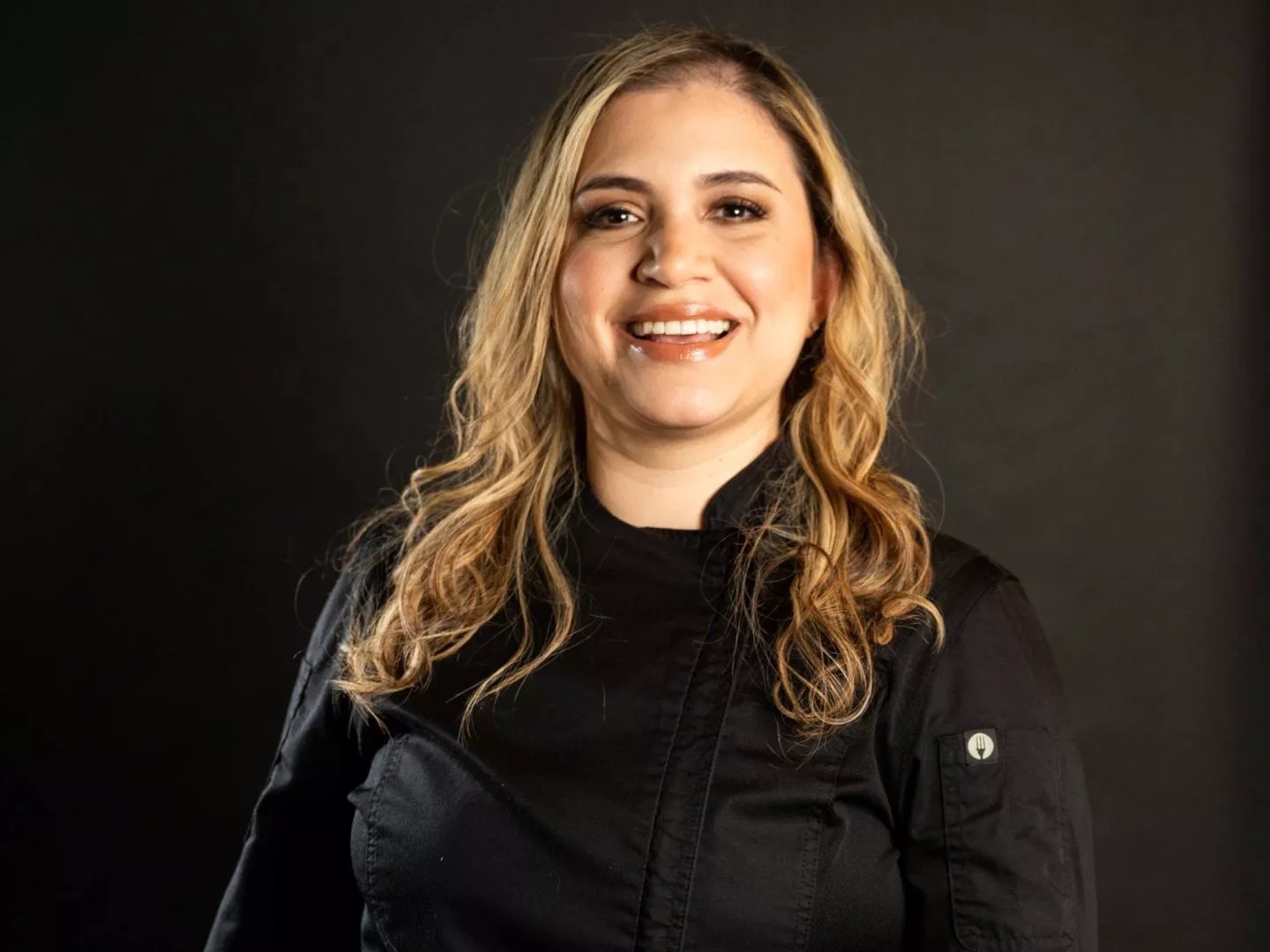
Alessia Benavides: Moving from educator to bonbon expert
Alessia Benavides knows what it means to persevere.
Creating scores of shiny, perfectly uniform bonbons, as she does as owner of chocolate and candy shop Chocolatl is no easy feat. It requires a tricky technique called tempering that involves raising and lowering chocolate’s temperature to alter its internal crystal formation.
The three types of chocolate — milk, white and dark — have varying amounts of cocoa butter and milk fats, so each requires a different set of temperatures to reach a satisfactorily tempered state.
Chocolate that’s tempered correctly has an appealingly glossy look, a creamy mouthfeel and it stays solid in warmer temperatures. If not done well, the chocolate is dull and crumbly.
If this sounds like a tedious process for creating bite-sized sweet treats, it is. And it’s a necessary step before Benavides even goes about creating the fillings in each of Chocolatl’s bites. The bonbons are filled with anything from rich brown butter cookie dough and creamy cheesecake to punchy mango margarita and rich, sweet pina colada.
Benavides formulates with inspiration from her favorite flavor combinations — a point at which creativity meets technique.
“I specialize in French baking, so everything bread, everything torte, but I’ve always been obsessed with chocolate,” said Benavides, who also works as a pastry chef-instructor at The Art Institute’s San Antonio branch — something she’s done since 2012. “For years, I would order chocolates from other states and other cities, and then one day I was like, ‘What if that’s what I’m meant to do?'”
To follow that quest, Benavides took classes online from a chef in Las Vegas. It was a revelation in formulating recipes.
“You cannot just mix ingredients and that’s it,” she said. “There’s a whole set of steps you have to follow to create decent textures. I’m going to go to another masterclass of hers in September to learn some more new techniques, you know. Always learning, that’s important.”
Though the Benavides revels in the zen-like, solitary nature of bonbon production, she says her students provide a source of eager assistance when it’s needed. Her Chocolatl Mother’s Day orders, for example, were so stacked up that she had no choice but take some students up on their offers to help.
Fulfilling those orders, Benavides fell comfortably back into instructor mode, walking the students through painting and filling each mold in a uniform manner. Such exercises, she said, show her which students possess the innate discipline required to become a successful pastry chef.
“I’ve seen a lot of students, and there are always a handful that constantly ask for help, advice on how they can get better at what they’re doing,” she said. “There are the ones that don’t have the patience, but the ones that do and want to get better, they definitely motivate me even more to help them as much as I can.”
Though her dedication to detail has served her well, Benavides didn’t always expect to be putting it to use in a kitchen. Even though she enjoyed baking cakes and cheesecakes with her grandmother while growing up, she always expected to forge a career as an architect or civil engineer — albeit while running a bakery as a side gig.
To her parents’ initial disappointment, she changed her career path at the last moment and enrolled in culinary school.
Her dedication and attention to detail are now paying dividends.
Benavides graduated from lauded local culinary business incubator program Break Fast & Launch in 2022, and she launched Chocolatl in January of this year. Benavides now ships her bonbons — available in a dozen flavors — and other sweets nationwide. Among the business’ other popular offerings are its guava alfajors, a South American dessert made with two cookies surrounding a filling of dulce de leche and guava paste.
When not fulfilling orders or teaching at the Art Institute, Benavides somehow finds the time to offer in-person and online classes for home cooks and aspiring pros. She’s obsessed with chocolates, but teaching the next generation of pastry chefs is a worthwhile endeavor while she ramps up more business for Chocolatl.
“I have a couple of students that are very motivated. They’re always doing something, asking me what’s next, when can I come help,” she said. “They’re so interested, and that motivates me. They’re always learning, so I’m always learning.”

Elise Russ: Making familiar desserts that lay just outside the comfort zone
The menu of Castle Hills eatery Clementine showcases a blend of fresh Texas ingredients with contemporary techniques, resulting in dishes that are both comforting and inventive.
Pastry chef-owner Elise Russ’ desserts at Clementine especially shine. Her carrot cake features the requisite cream cheese icing paired with candied pineapple and coconut ice cream.
But this isn’t your grandma’s carrot cake. The decadent layers are separated by the tangy, airy frosting and topped with golden brown tuile cookie shards. The phrase “too pretty to eat” isn’t an exaggeration here.
According to Russ, creating an arresting visual representation of a comforting dessert is just one part of stretching diners’ imaginations.
“I like for my desserts to be recognizable, so that someone can look at the menu and say, ‘Carrot cake or chocolate mousse — I know what that is. I like to eat that,'” she said. “And then when they get it. It’s a little bit of a surprise, because it looks different from what your mom would have made.”
Her approach even extends to humble treats like the donut.
“It’s fun to challenge people by doing something like donuts — but with cardamom,” Russ said. “Maybe that’s not necessarily a flavor people would eat often, but they recognize a freshly fried donut and coffee ice cream. So it’s finding a way to challenge our guests, but at the same time providing something that’s familiar.”
Russ honed her artistic presentation working at hotels and fine dining establishments before she and husband John Russ — a recent James Beard Award finalist — opened Clementine. Growing up, her parents worked in hotels, so her goal had been to be an executive pastry chef at a Carlton Ritz or Four Seasons property.
She nearly realized that dream in Chicago, where she worked at a high-end hotel property for three years. While the gig polished her skills, the highly competitive environment eventually began to wear on Russ.
“You had to be very cutthroat and couldn’t really be friends with anybody, because everyone wanted your job — and the way to get promoted was to be backstabbing and looking out only for yourself,” she said. “I became this person I didn’t like. I wasn’t nice. I just really didn’t want to live that kind of life, and it took me a long time to let go of that person.”
Russ also encountered the hardships of being a woman in the kitchen, especially on the line. Working in the kitchen during service required her to “be mean,” she said. Russ said women in the kitchen are often forced to change her their personalities and harden themselves to deal with what’s frequently a boys’ club.
Meeting Russ, it’s hard to associate her with the kind of isolating, self-preserving behavior she said she once took on as a survival mechanism. She exhudes warmth and calm as she speaks. She credits that personal growth to becoming a mom.
“Things became a lot easier once I had kids,” she explains. “I became a lot more empathetic and understanding. In this industry, you know, we sacrifice everything for our job. That includes our health, mental health, family and our friends. I missed every single wedding, every holiday, while I was building my career. And I don’t want that for my staff. I want it to be different for them.”
Russ’ daily focus oscillates between creating the components for each dessert in the mornings and administrative duties tied to the business. On rare occasions, when needed, she returns to her roots and works a dinner service alongside the rest of the kitchen staff. On those nights, she says, a calm comes over her that’s unlike anything else.
“That’s what I love doing. But inevitably, I’m getting interrupted by purveyors or John or calls or emails or something that like has to be dealt with — you know, money or payroll or invoices,” she said. “I love when I can just work that station and kind of pretend to be a cook when people walk in. I can just do what I love at my little table in my corner. It just feels right.”

Jenn Riesman: Proving the cost of pastry is more than its ingredients
Jenn Riesman’s mark on the San Antonio food scene can be seen in the desserts she supplies to area restaurants and in her own bake shop in Shavano Park. Her beautiful, flavorful creations have graced wedding tables and exclusive dinner parties for nearly a decade, and now she’s created a safe, inclusive place for pastry lovers to gather.
That Reisman was able to launch the brick-and-mortar incarnation of her Rooster Crow Baking Co. in fall 2022 as historic inflation drove up the prices of pantry staples such as flour, sugar and eggs is no mean feat. But she wants people to know that the cost of doing business as a pastry chef is about more than those ingredients.
“I paid a stiff price to be able to do what I do. And it’s not just the cost of goods,” said Reisman, 35. “It’s the early hours, long hours, time dealing with bullshit in kitchens. If you go to a nice restaurant and order a beautifully plated dessert, the person who plated it is probably a woman and probably mistreated.”
Indeed, Riesman said she — like many women in the culinary industry — encountered stereotypes, limited opportunities, lower pay and worse. The lack of mentorship and representation in leadership roles can also make it difficult for female chefs to find guidance and role models, she added.
“I’ve spent my entire adult life in kitchens, getting yelled at, being touched or being sexually harassed,” she said. “Or manipulated because of how passionate I am about what I do. Every dessert that comes out of a kitchen, someone devoted their time to it, their efforts. That’s the real cost.”
Riesman’s connection to her craft despite all obstacles is apparent on a visit to her shop. It shines through in every massive chocolate whoopee pie or butterscotch bourbon banana pie in the glass case at Rooster Crow. She uses high-quality chocolate and butter, as well as fresh seasonal fruit, even though higher prices have cut into her bottom line.
The storefront incarnation of Riesman’s Rooster Crow was an unexpected turn of events set in motion by the closure of longtime Shavano Park bakery Sol y Luna Baking Co. Its owners, friends of Riesman, were ready to retire, and were willing to vouch for her when the landlord sought someone new to take over the space.
“It was never a longstanding plan for me to open a bakery. It’s a random spot, but I just didn’t have a choice. What else was I going to do?” Riesman said. “It fell in my lap, but now it’s a safe space. I’m a resident of the area now, so if I can’t sleep, I can just go to the shop and let my soul breathe. I create the things that I love.”
The demanding nature of pastry chefs’ craft often involves unpaid — or barely paid — apprenticeships following years of specialized training in culinary school. In Riesman’s case, that experience included years of jumping city to city for hotel jobs, sometimes for as little as a dollar-per-hour raise.
Competition within the industry, especially in hotels, is also fierce. Standing out requires continuous innovation and staying up-to-date with trends. Balancing artistic expression with the need to break even as a business owner is a level of stress Riesman said she’d never intended for herself.
Though the price point of Riesman’s meticulous creations are a step above what consumers pay at a grocery store for baked goods, she’s convinced it’s a small price to pay for what a truly exceptional dessert can symbolize: hope.
“You don’t just buy cake for a party because it’s sweet or a luxury,” she said. “It’s not the butter, it’s not the chocolate, it’s not the price. A dessert is the beginning of a marriage. The beginning of a life, a bar mitzvah. It’s the hope that you’ll live for another year, and it’s the celebration of the year past. That’s the luxury that people are paying for.”
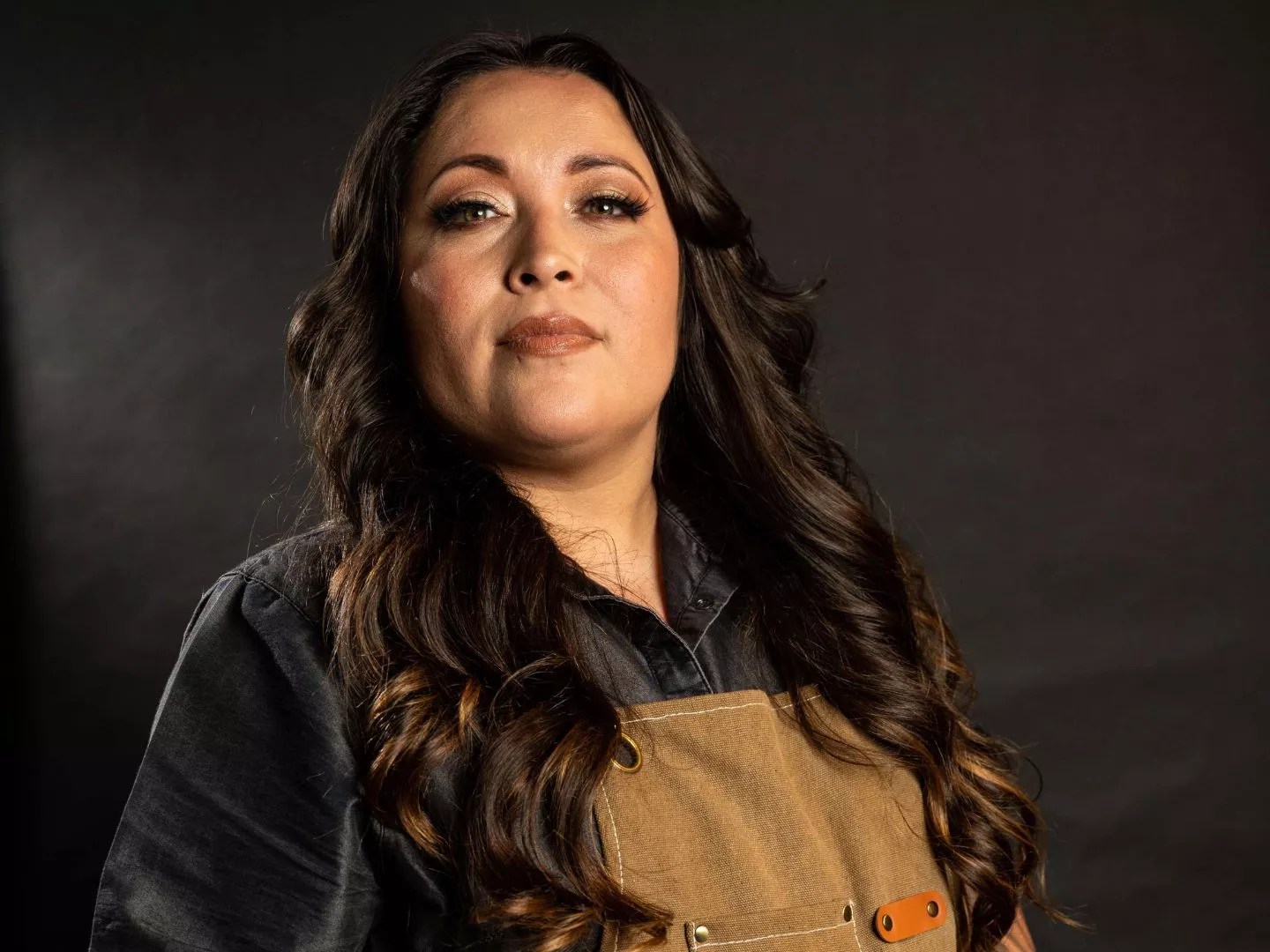
Grecia Ramos: Charting a path beyond the
barbecue business
Grecia Ramos’s leap to baking as a profession occurred on something of a whim.
Her last-minute bread pudding entry in a barbecue competition earned her 13th place in a contest of nearly 300 entries. Ramos has crafted the desserts for husband Esaul Ramos’ lauded Southeast San Antonio spot 2M Smokehouse since its inception, but that surprise finish helped convince her that she could strike out on her own.
Ramos is now finishing out a small space in Castroville that she expects to launch in early fall as her artisan bakery. The venture, dubbed Baked, will turn out sweet treats for 2M while offering the nearby community a variety of baked goods. The shop will specialize in sourdoughs and laminated doughs — two of bread’s most temperamental categories.
Laminating dough involves folding in butter multiple times, creating thin, alternating layers while keeping the butter cool. It’s tricky but results in the delicate and flaky layers prized in croissants and puff pastry.
Sourdough, on the other hand, relies on environmental factors such as temperature and water quality, and it begins with a live, fermented culture of fresh flour and water. The process naturally leavens the bread while imparting its namesake tangy flavors.
Both techniques can be daunting to novice bakers, as many learned during the pandemic, but Ramos considers them worthwhile challenges.
“They’re so tedious but so rewarding for me,” she said. “I got into lamination, and you can see the process between the layers and folds — and the mouthfeel, the texture of the finished product will depend on how many folds you do. And sourdough, it’s so dependent on all these factors, you know, the environment itself. With that, we’re going to be learning every day, it never stays the same. And that’s probably what makes me want to keep doing that.”
Like many pastry pros, Ramos also savors the meditative aspect of making bread, repetitively working with her hands while working to perfect the craft. She said she’s forced to apply that calculated, purposeful approach because the processes themselves are tedious and time-consuming.
“I feel like most of most of the time in the world, you’re at the mercy of time, right?” she said. “So, you’re like, constantly in a hurry, constantly trying to rush things. And when you’re doing sourdoughs or laminations, you really can’t rush it. You can try, but you’re not going to have a good product. When it comes to those two things, you’re at their time, at their mercy. So you’re bound to slow down and take in what it is that you’re doing and how you’re doing it. It can be very peaceful.”
While bread will be the star at Baked, Ramos’ first stint as pastry pro came through the sweets she produced for her husband’s thriving barbecue spot.
Ramos’ popular cheesecakes, tres leches cake and toaster pastries have drawn almost as much attention to 2M Smokehouse as its meticulously smoked meats. She and husband Esaul strive to strike a harmonious balance, both at work and at home. It’s a relationship built on respect but with a healthy dose of fun stirred into the mix.
“Our first date was to chickenshit bingo!” Ramos said. “It was the most fun I’ve ever had on a first date.”
Ramos said she and Esaul feel a responsibility to change the culture of the local food industry, especially when it comes to couples working together.
“Most people do know me from 2M as Esaul’s wife, you know, the barbecue wife, and I’m OK with that,” she said. “That is where I started, that’s where I got a little notoriety. So I am very proud when someone attaches me to him as a peer in this industry. I feel like I’m making my way now, and people are finally starting to see me for who I am and for what I can bring to the table other than the desserts that I’ve made these past six years. I feel like we did a great job with 2M. So this is just the beginning of another chapter for us.”
Subscribe to SA Current newsletters.
Follow us: Apple News | Google News | NewsBreak | Reddit | Instagram | Facebook | Twitter| Or sign up for our RSS Feed
Related Stories

New online sweet shop Chocolatl makes a splash on the San Antonio scene with colorful bonbons

San Antonio pastry chef Jenn Riesman to open bakery in former Sol y Luna space
San Antonio pastry chef Jenn Riesman holding Wednesday soft opening for new bakery


Little Bites: New summer menus, Maverick’s limited edition gin making San Antonio food news

Frozen strawberries recalled by H-E-B, Walmart and Costco for possible hepatitis A contamination
This article appears in Jun 14-27, 2023.
