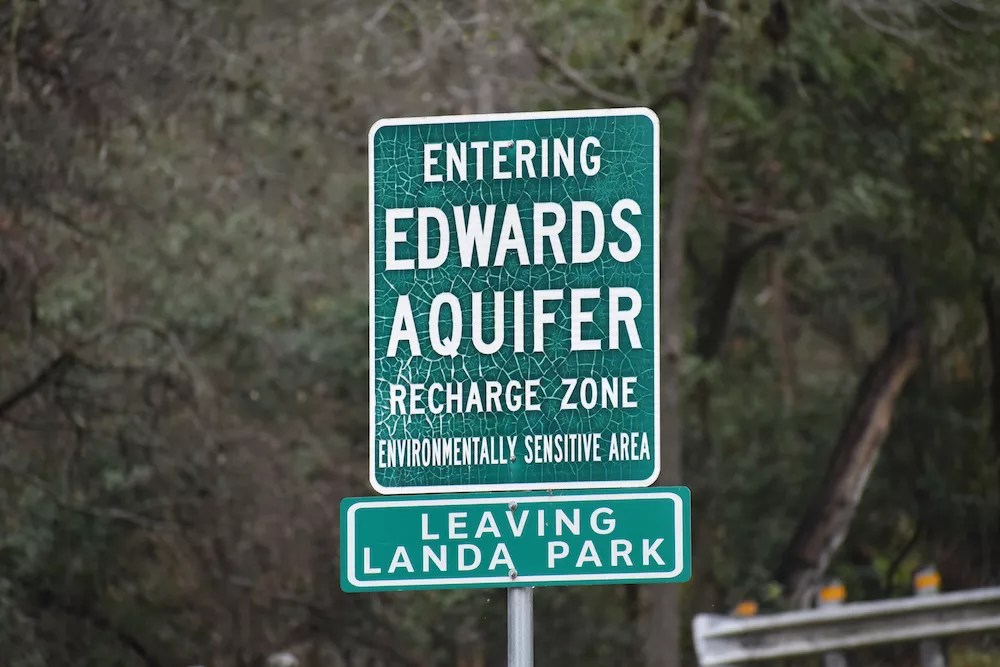
Even though the Texas Legislature passed high-profile bills to protect the state’s threatened water supply this session, officials with the Greater Edwards Aquifer Alliance (GEAA) said other significant water-related proposals died as culture war debates consumed lawmakers’ time.
The legislative clock ran out on at least nine major water-protection measures that had already received committee approval, according to an analysis by the GEAA, which represents water users’ interests in 21 counties overlying the Edwards and Trinity aquifers. The Edwards Aquifer is San Antonio’s primary source of drinking water.
“It was disappointing to see so many good bills get pretty far along only to die at the end,” said Rachel Hanes, GEAA’s policy director. “There was hope this session that we’d see some common sense legislation passed, which made it all the more painful to see those bills not make it across the finish line.”
Among the water-related proposals that never saw final vote were:
- House Bill 1400, which would have created a state groundwater science, research and innovation fund. It passed the House, was referred to a Senate committee but never got a hearing in the upper chamber.
- House Bill 1730, which would have studied the effects of PFAS chemicals, also known as forever chemicals, on rivers, lakes and reservoirs used to supply public drinking water. The proposal was placed on the House floor calendar but never received a vote.
- Senate Bill 1855, which would have bolstered requirements that developers show certain proposed subdivisions don’t place undue burdens on groundwater supplies or jeopardize them in the future. It passed the Senate and a House committee before dying in the House Calendars Committee.
Also among the casualties were House Bills 2105 and 2347, both of which would have improved water conservation in portions of the Texas Hill Country that are under GEAA’s aegis.
Before the session was out, state lawmakers did pass a sweeping plan to invest $20 billion in state water projects over the next two decades along with a bill that would ban homeowners’ associations from punishing residents for not keeping their lawns green and pristine.
Even so, GEAA officials said it was frustrating to see debates over Republican-backed culture war bills eat up time that could have yielded other useful water protections. During the session, state lawmakers considered proposals such as Senate Bill 10, a likely unconstitutional measure that would require public schools to display the Ten Commandments, and House Bill 229, which seeks to strictly define men and women based based on their reproductive organs.
“We saw a number of good bills get through committee and just sort of sit there on the calendar as they debated silly things,” GEAA Executive Director Annalisa Peace said.
Peace she’s heard from San Antonio and Hill Country residents frustrated by the Lege’s lack of progress on protecting Texas water sources. The recently completed session unfolded as the state grapples with historic drought conditions.
“I’m hearing a lot of comments from people who are very concerned, and the concern is bipartisan,” Peace said. “It cuts across any party politics.”
Subscribe to SA Current newsletters.
Follow us: Apple News | Google News | NewsBreak | Reddit | Instagram | Facebook | Twitter | Or sign up for our RSS Feed
Related Stories

In booming Central Texas, wastewater is polluting rivers and streams

Shit Show Session: Texas faces real problems. Don’t expect the Lege to solve them.

‘Water is the new oil’ as Texas cities square off over aquifer pipeline plans

San Antonio data centers guzzled 463 million gallons of water as area faced drought
This article appears in Jun 12-25, 2025.