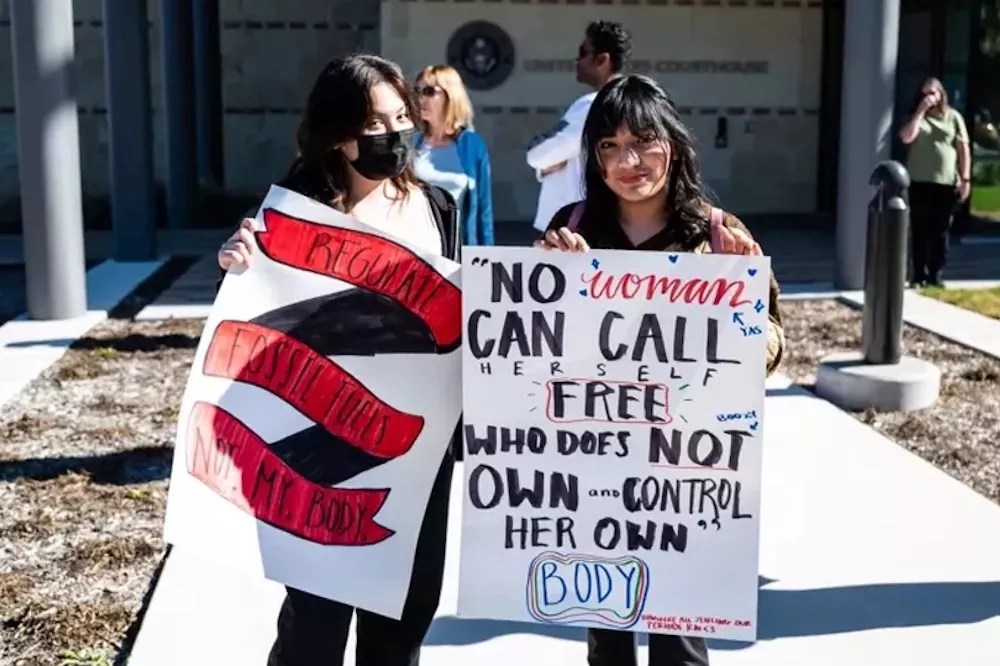
Women denied care under Texas’ near-total abortion ban are sounding the alarm about a pair of bills moving through the Texas Legislature. Both pieces of legislation purport to fix uncertainty in the state’s existing laws about the procedure but could have dangerous consequences, they warn.
During a Tuesday press call, the women — all plaintiffs in the Zurawski v. Texas lawsuit — warned that House Bill 44 and Senate Bill 31, both of which are now in committee, would enable Texas to invoke a 1925 law allowing prosecutors to bring stiff criminal charges against patients, providers and families seeking abortion care.
Both pieces of legislation have picked up bipartisan support because they appear to clarify when doctors can legally perform abortions to save a pregnant patient’s life or prevent catastrophic injury. However, the Zurawski plaintiffs argue the bills, as written, amount to a bait-and-switch ploy by anti-abortion lawmakers.
“When these bills were filed, some of us thought that there was hope, and that maybe our stories did something — and then we read them,” said Kaitlyn Kash, who was forced to travel out of state to terminate a pregnancy that would have delivered a child with severe abnormalities. “We realized this legislation is not what it is being sold as, and as storytellers who have come forward publicly, we knew we had to speak out. We are fed up and tired of the state treating us this way.”
In Zurawski v. Texas, more than 20 women sued to overturn the state’s near-total abortion ban, saying it prevented them from getting medical care for their complicated pregnancies. The all-Republican Texas Supreme Court ultimately rejected their challenge.
While the language in HB 44 and SB 31 appears to offer to more clarity on when doctors can provide abortions, it still doesn’t expand exceptions under the existing law. That means patients with problem pregnancies that would cause the fetus to be born dead or die shortly after being delivered still would be forced to carry to term, the women said.
Worse, though, they pointed to testimony by legal experts who warn that both bills — unless amended — would open the door to reviving earlier state laws that would impose harsh prison terms on women who seek out-of-state abortions and any others who help them obtain the procedure.
“The way these bills are written right now force women like me to endure the torture of nonviable pregnancies,” said Lauren Miller, another Zurawksi plaintiff. “We are fighting for scraps here. How many times do we have to stand up and beg for our most basic rights?”
At the same time as lawmakers consider the abortion clarification bills, they’re also hearing Senate Bill 2880, a proposal that would make it a felony to fund someone’s travel to go outside the state to get abortion care. That bill is authored by State Sen. Bryan Hughes, the same vehemently anti-abortion Republican who authored HB 31.
The Zurawski plaintiffs also sent a letter urging lawmakers consider their concerns about the bills. What’s more, they plan to visit the Texas Capitol on Tuesday to speak to any legislators who will hear their concerns.
Hollie Cunningham, who was forced to leave the state twice in one year for two non-viable pregnancies with the same fetal diagnosis, expressed anger that members of the Texas Legislature don’t appear to be listening to women whose lives have been affected by the ban.
“This is not freedom, this is not what family values look like,” Cunningham said. “Texas has become a dangerous place for pregnant women and for the people who love them. And now this new bill, with the 1925 language intact, could open the door to prosecuting women or their loved ones for seeking care.”
Subscribe to SA Current newsletters.
Follow us: Apple News | Google News | NewsBreak | Reddit | Instagram | Facebook | Twitter| Or sign up for our RSS Feed
Related Stories

Texas Republican lawmakers unwilling to change abortion laws to address doomed pregnancies

Texas Attorney General sues San Antonio to stop it from paying for out-of-state abortion travel

San Antonio passes abortion travel fund as activists hold vigil for women who died due to Texas’ ban

North Texas police, residents on edge as far-right influencer plans ‘Protect White Americans’ rally

House Republicans refuse to pass ceremonial resolution honoring Cecile Richards

Texas Lottery executive director resigns as lawmakers’ scrutiny mounts

Abortion-rights group convinces Texas lawmakers to amend bill that could have opened women to prosecution

Amended bill clarifying Texas abortion laws receives Senate panel approval

Texas Legislature clarifies when doctors can perform life-saving abortions
This article appears in Apr 2-15, 2025.