


Cityscrapes is a column of opinion and analysis.
Over the past few months, San Antonio City Hall hasn’t provided an impressive demonstration of how our public officials, both elected and appointed, make decisions. At the same time, the November election will provide local voters with a rare opportunity to express their views on the city government’s performance via a half-dozen city charter changes on the ballot.
Those looking for reasons to question our city leaders’ attention to the greater good need look no further than the great rush to push through a deal — one made out of the public eye — to finance and build a new downtown ballpark for the San Antonio Missions, precisely where developer Graham Weston had sought to build it almost a dozen years ago. Despite all the time in the world to involve the larger community, the deal was specifically crafted to avoid the necessity for a public vote, unlike both the Alamodome and the Frost Bank Center. The deal itself was remarkably generous to Weston and the rest of the Missions ownership, with the city footing almost 80% of the cost.
But wait! According to some of our more thoughtful City Council members, the deal won’t involve real tax dollars. Instead, it will be financed with “tax increment” dollars that will come from all the new development Weston Urban has promised to build around the stadium. But those new tax dollars could have been used to boost the city’s overall tax base, aiding every property owner in the city. Or they could have been employed for a different project of greater public benefit, perhaps one we could vote on.
But, no, it appears Weston is destined to get the deal he wanted.
What Weston also wanted was to displace the residents of the Soap Factory Apartments, which will be demolished as part of the development plan. One would assume Mayor Ron Nirenberg and other officials — so committed to building affordable housing and increasing our limited stock — would make it a point of offering Soap Factory residents financial help in moving and finding new homes. Nope, that wasn’t part of the deal — at least not initially. They would be on their own.
For Weston Urban, the Soap Factory was a dump. For its residents, it’s a rare affordable place to live in the center city. And when neither the developer nor the city staff seemed to care, those residents protested. With the help of community organizations including the Texas Organizing Project, the Esperanza Peace & Justice Center and COPS/Metro, the residents managed to get a $500,000 fund — a pittance — for relocation aid.
Not our public leaders’ finest work.
Then there’s the grand San Antonio International Airport expansion project. Seemingly desperate to get more of the nonstop flights regularly demanded by the city’s business leadership, the deal for new terminal space neatly advantaged Delta and American while leaving Southwest — the airport’s single largest carrier with some 37% of its passenger volume — in aging and crowded Terminal As.
Nirenberg and senior city staff somehow failed to recognize that Southwest could simply not sign a long – term lease, making the entire multibillion dollar project financially questionable. Southwest then sued the city, and a public he said-she said ensued. While it’s not clear what the full story is, what’s clear is that the mayor and city staff bungled a major deal.
Finally, there’s “Project Marvel,” the grand scheme to build a new Spurs arena downtown, likely coupled with a new entertainment district, a convention center expansion, a big new hotel and maybe even a cap over U.S. Highway 281 and I-37 to connect the “Marvel” to the Alamodome. Yet again, the whole approach of our city leaders is to keep the public in the dark using nondisclosure agreements. Those agreements, by the way, apply to details on the exact scope of the project, on the cost, on how that cost would be financed and even on whether we’ll actually have the opportunity to vote on it. Then there’s the larger question: does a new arena downtown and everything else make any sense?
Public officials in other cities have balked at picking up the tab for sports team owners. Voters in other places have made clear that they prefer other priorities for public spending. Other cities have genuine public information and engagement on major projects.
Not here.
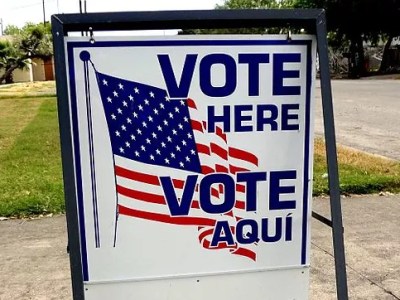
San Antonio voters will face a set of proposed city charter changes at the bottom of the November ballot. Propositions A, B and D involve the ethics review board, updated charter language and city employee political activity. Proposition C would undo the limits on the city manager’s tenure and pay that the voters approved by 59% in November 2018, neatly reversing the previous vote. Proposition E would boost the pay of the mayor and council and provide for regular increases, while Proposition F would increase council terms from two years to four.
Make it a point to think about and cast a vote on each of those propositions, considering your own assessment of how the council and city manager have made these deals and policy choices.
Heywood Sanders is a professor emeritus of public administration at the University of Texas at San Antonio.
Subscribe to SA Current newsletters.
Follow us: Apple News | Google News | NewsBreak | Reddit | Instagram | Facebook | Twitter| Or sign up for our RSS Feed
Related Stories

Cityscrapes: San Antonio’s insider ballpark deal deserves public scrutiny, public vote

New San Antonio Missions ballpark would raze low-income downtown apartments

Cityscrapes: San Antonio leaders should consider past mistakes when mulling a new ballpark
Early voting has begun. Here’s where to vote in Bexar County — and what we’re voting on

The San Antonio Spurs voted early. Have you?

Plans for new San Antonio Spurs arena on hold after state declares ITC a landmark

Narrow margins for two San Antonio ballot propositions should be warning for city leaders
This article appears in Oct 16-29, 2024.