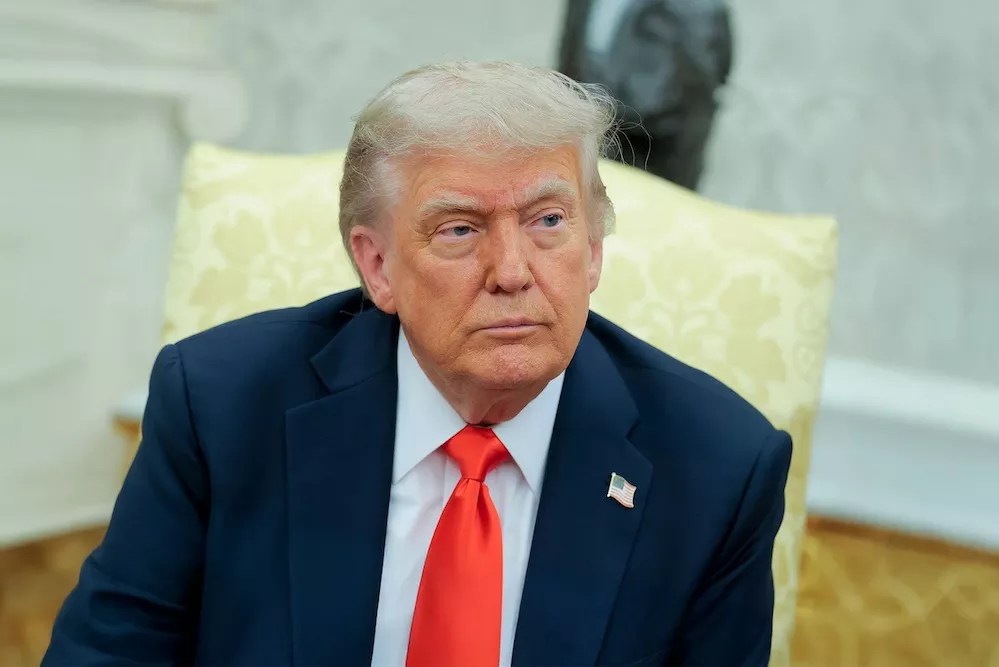
A growing number of signs suggest Trump’s tariff tantrums and mass deportation roundups are delivering a bruising one-two punch to the Texas economy.
Numbers released this week by the Federal Reserve Bank of Dallas show the Lone Star State faces slipping job growth, declining construction starts and rising inflation. All signs its economic engine is sputtering. And all at least partially tied to the White House’s policies.
The Dallas Fed’s bleak analysis arrives as the national Consumer Price Index jumped 3.1% year-over-year in July, the steepest rise in five months, and as the Labor Department said Thursday that wholesale inflation rose 0.9% from the prior month, its largest leap in more than three years.
“The bottom line is that there are early warning signs in the data that economic harm in the form of employment losses and higher prices are happening,” University of New Hampshire economic researcher Michael Ettlinger said of the deluge of dismal numbers.
The trends pile up as the Trump administration has slapped massive tariffs on U.S. trading partners and levied penalties on most goods entering the country. The administration also is undertaking the most aggressive immigration crackdown in recent history.
Economists warn the Lone Star State will be among those hardest as Trump’s moves ripple through the economy. Texas is one of the top states for international trade, and it also has one of the largest percentages of undocumented immigrants in its population and workforce.
Texas’ June employment dropped 1.3% from the month before, according to the Dallas Fed’s report, and job growth since the start of the year has slowed to 1.8%. While that’s higher than the national rate of 0.7%, it’s off considerably from the state’s 2.5% increase in May.
Texas employers surveyed by the Dallas Fed said they’re enduring workforce disruptions from the White House’s immigration policy. Those shakeups come as businesses, worried about uncertain economic conditions, slow hiring and try to hang onto the positions they have, according to economists.
“If deportations continue at current levels or further accelerate, we expect … the data will increasingly reflect economic injury such as slowdowns in economic growth, higher unemployment rates, declines in business formation, increases in business failures and broadly rising prices,” Ettlinger said. “As has been seen in past mass deportation episodes in American history, these policies damage the wellbeing of all Americans, not just the wellbeing of its noncitizen residents.”
Texas’ construction contract values plummeted 26% from a January peak, and the housing market has dropped 7% since January, according to the Dallas Fed.
The Fed’s report cites an analysis by the Association of General Contractors of America indicating that uncertainty around Trump’s trade policies is leading companies to cancel or delay new projects.
Michelle Schulz, founder and managing partner of Schulz Trade Law PLLC in Dallas, attributes much of that slowdown to the president’s trade polices.
“The feedback we’re getting from international companies in Texas is that we’re making it extremely hard to justify making more investment here,” she said.
At the same time, Texas’ consumer price index jumped in May after declining for most of 2024 and the beginning of this year, the Dallas Fed also reports. The core consumer price index — a number that factors out volatile food and energy prices — was up 1.1% for the month.
The report notes that inflation likely hasn’t risen more quickly because businesses have decided not to eat some of the cost of tariffs rather than raise consumer prices. That delay is likely coming to an end, researchers noted.
“I do expect things will get worse,” Schulz said. “It’s been a slow trickledown since April, but we’re starting to see more companies pass on price increases as they run out of inventory.”
She added: “I see prices going up and imports going down.”
Subscribe to SA Current newsletters.
Follow us: Apple News | Google News | NewsBreak | Reddit | Instagram | Facebook | Twitter | Or sign up for our RSS Feed
Related Stories

Trump tariffs will kill 410,000 jobs in Texas, longtime state economist warns

San Antonio will be U.S. metro most damaged by Trump’s Canada trade war, study finds

Texans overwhelmingly voted for Trump. Now, they’ll overwhelmingly suffer the economic fallout.

Feds plan to build nation’s biggest migrant detention center at Texas’ Fort Bliss

Health insurance carriers request raising ACA premiums by more than 20% on average in Texas
This article appears in Aug 7-20, 2025.