

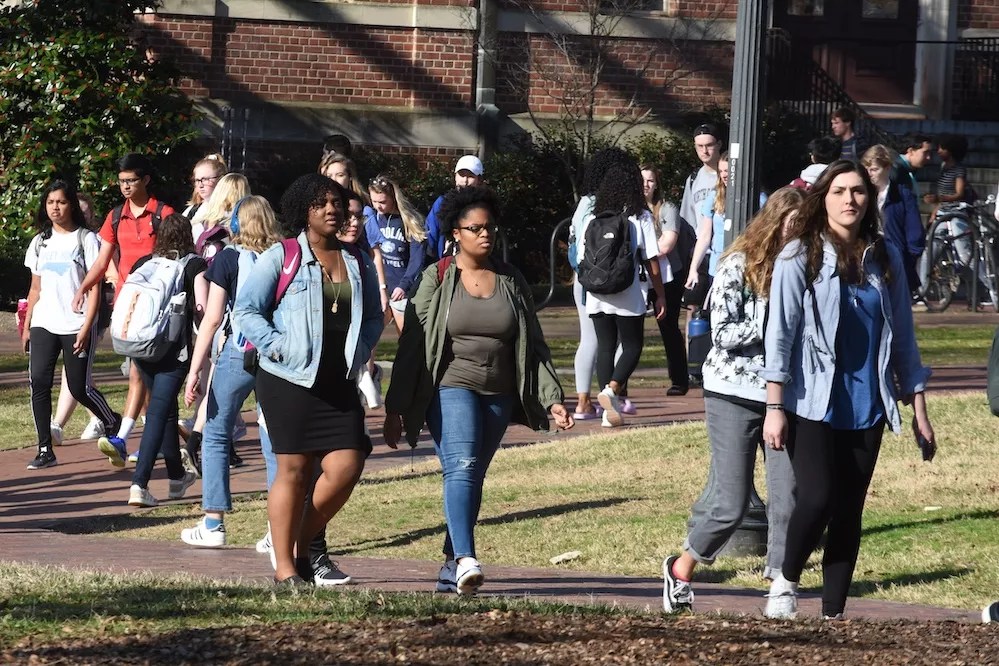
San Antonio Independent School District, now grappling with a $50 million budget deficit, has closed campuses, struggled to keep schools heated during winter and is dealing with low teacher morale.
All those problems could get worse, education advocates warn, if Gov. Greg Abbott is able to ramrod a bill creating school vouchers though the Texas Legislature.
During his State of the State speech last Sunday, Abbott declared vouchers an emergency item, something Lt. Dan Patrick, who controls the agenda of the Texas Senate, said could enable the upper chamber to pass its version of a voucher bill in a matter of days.
Former San Antonio mayor Ed Garza, a member of SAISD’s Board of Trustees, told the Current that the Republican-controlled legislature’s passage of vouchers is a matter of “not if, but when.”
A bipartisan cohort of pro-public education lawmakers, including San Antonio GOP Rep. Steve Allison, killed Abbott’s previous voucher bill in the 2023 legislative session, warning it would rob the state’s public education coffers to give the rich a break on the bills for their kids’ private school tuitions.
Abbott spent the past election cycle backing primary challenges to members of his own party who dared to stand against vouchers. As a result, Allison lost his seat representing Texas’ 121st District to criminal defense attorney Marc LaHood, an Abbott ally.
Although Patrick is convinced this session’s voucher bill will pass the Texas Senate, it still must clear the House. Lawmakers from both sides of the lower chamber’s aisle continue to question the merits of vouchers, which many education experts have denounced as having disastrous results in other states.
State Rep. Diego Bernal, a Democrat who represents downtown San Antonio and the inner North Side, said he and other voucher opponents aren’t going down without a fight.
“To say, ‘Here’s tax dollars to go somewhere where not every kid can get in, not every kid can afford it, it’s not even geographically available to everybody, and you don’t have to take the [the state’s standardized achievement tests]?’ It’s a fucking scam,” Bernal said.

Already underfunded
During a cold spell earlier this month, SAISD was forced to shift students between buildings because some classrooms couldn’t be heated beyond 50 degrees, according to media reports.
The incident came roughly a year after the district was forced to close all of its schools for two days due to HVAC issues. An audit of its heating and cooling systems published in May reported that it would have cost the district more $500 million to get the aging equipment up to par.
The deferred maintenance comes down to a lack of funding, SAISD trustee Garza said. Like many serving the inner city, the district faces declining enrollment, which led to a controversial decision to close 15 SAISD campuses last year.
Falling birthrates, the rise of charter schools and a lack of affordable housing within the district have left SAISD underfunded and on the ropes.
“You start to add all those up together, and that’s when you start seeing the impact it has, especially when you’re talking about older districts that had built schools for 80,000 students, and now you’re serving 40,000 students,” Garza said.
The state hasn’t been much help either.
Due to its falling enrollment, SAISD is projected to receive $36,533 in total daily funding this fiscal year — about $1,600 less than last year’s budget.
And it isn’t the only Texas district watching its funding drain away.
The Lone Star State only spends $10,387 per public school pupil, ranking it 41st in the nation on that metric. The current funding level also amounts to a 12.9% decline when adjusted for inflation for the past decade, according to a study from the Texas American Federation for Teachers.
San Antonio State Rep. Bernal told the Current the state’s per-pupil expenditure also doesn’t explain the whole story.
“That figure should really be broken down into the classroom spending,” he said. ”Classroom spending is different than paying for busing or school lunch and school breakfast. That’s the number that people push, but even less [of the total] is being spent in the classroom.”
And the number will drop sharply if vouchers pass this legislative session, Bernal warns.

Swindle in progress
Although Abbott and Patrick appear convinced of a voucher victory this session, observers said a bill’s fortune in the House is far from guaranteed.
The legislation voucher proponents are hanging their hopes on is Senate Bill 2, authored by Republican State Sen. Brandon Creighton of Conroe. That proposal would give families a $10,000 tax-funded voucher to pay for private school. The amount would rise to $11,500 for students with disabilities, and those who homeschool their children would be eligible for $2,000.
However, the bill leaves out additional funding for public schools that will see enrollment declines as more parents shift their kids to private campuses.
“What’s been communicated to me from the lieutenant governor’s and governor’s offices is that there will not be any school-finance improvements for districts like SAISD unless they are in conjunction with, or on a parallel track with, a voucher bill,” Bernal said.
While Abbott has suggested in public comments that he’s eliminated enough voucher skeptics in his own party to ensure a bill’s passage, Bernal said he may be misreading the room. Even after the governor’s purge, some rural Republican lawmakers remain opposed to vouchers, cautioning that they’ll ruin already underfunded small-town public school systems.
Bernal, a graduate of San Antonio’s Thomas Jefferson High School whose own kids attend SAISD, sees vouchers as welfare for the urban elite.
“There’s no requirement that these schools that accept vouchers educate students with special needs, no requirement that they don’t curate the student body and they don’t have to take the STAAR,” Bernal said, referring to the state’s standardized tests that assess students’ achievements and knowledge.
Bernal said his biggest concern with Abbott’s voucher plan is that includes no oversight for new private schools that pop up.
“I think you will see a new cottage industry of private schools designed to take that voucher with no accountability, no standards, no oversight, no testing, no accessibility to students with different needs or backgrounds,” he said.
While San Antonio is a large city, it’s made up of many small districts. That means they’re especially vulnerable to the funding shortfalls a voucher program would bring on, Bernal said.
“There is not another major city in the country that has the jigsaw, redline-following district lines that San Antonio does,” Bernal said. “It’s not [the districts’] fault, but the state has failed to engage the districts, and the funding mechanisms are exacerbated by the unnecessarily large number of districts we have.”
Alejandra Lopez, the president of the San Antonio Alliance of Teachers and Support Personnel., said it’s more important than ever for educators and parents to call their lawmakers and demand more public school funding and teacher pay be included in whatever voucher legislation the legislature passes.
She said the Republicans’ full-court press for vouchers amid a public education funding crisis is an insult to teachers and parents alike.
“It really is a slap in the face for everyone who works in public schools and cares about public education,” she said.
Subscribe to SA Current newsletters.
Follow us: Apple News | Google News | NewsBreak | Reddit | Instagram | Facebook | Twitter| Or sign up for our RSS Feed
Related Stories

Abbott vows pay raises for teachers and more property tax relief

Assclown Alert: Bragging about Texas’ dismal funding of public education with Gov. Greg Abbott

School voucher advocate Marc LaHood wins San Antonio race for Texas House

Texas Senate passes Republican-backed bill to create school voucher program

Vandals tag South Texas Elon Musk mural with ‘Deny, Defend, Depose’
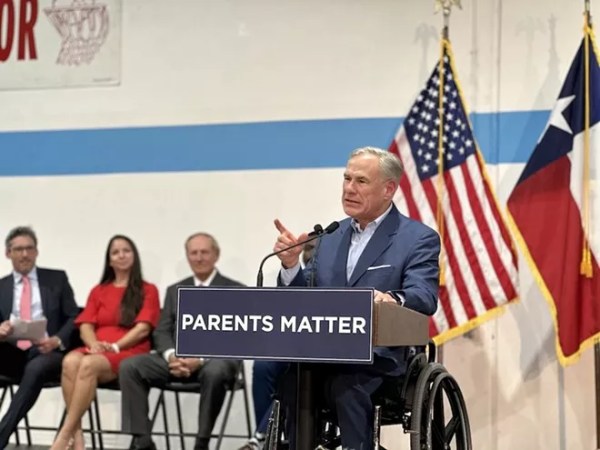
Gov. Greg Abbott caught in a lie during school voucher rally in East Texas

Texas ranks in bottom 10 in new study on the best- and worst-educated U.S. states

San Antonio’s NEISD shutters three school campuses as $39 million budget deficit looms

State shuts down San Antonio charter school mired in controversy

Texas Gov. Greg Abbott visiting private school in San Antonio on Monday
Analysis: Gov. Greg Abbott spins damaging lies as he pushes school vouchers

Video purportedly showing San Antonio ISD skirting anti-trans sports ban far from a smoking gun
This article appears in Jan 22 – Feb 4, 2025.
